Just Another Day

Just Another Day

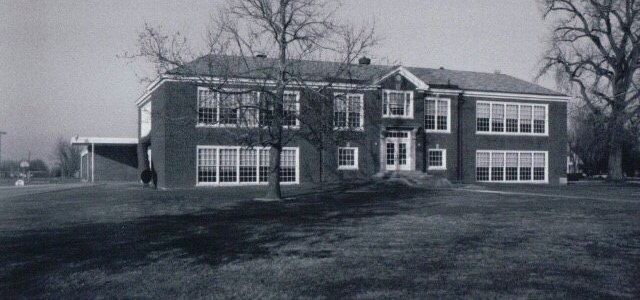
It was a day like any other day in our 1980 6th grade class at West School.  We had returned from recess and were settling down in our seats. The air smelled heavily of salty pre-pubescent kids cooling from a loosely supervised recess.  Sunlight streamed through the squared wooden windows which highlighted the swirling dust.  Though the thought of tarrying crossed our minds, we did not, because Mr. Bouldin was already at the front of the room and students did not tarry in his presence.

To understand the events of the day, it is imperative to understand the time and Mr. Bouldin which seem inexplicably intertwined.  Though Mr. Bouldin taught us all subjects history was his first love, and the army his second. Often times his wife even admitted to coming in third. He was a decorated Korean War Veteran, and at the time, Bouldin, as the most daring of children referred to him, was an active army reservist. He ran his classroom much like a military unit. Justice was swift and fair and generally not questioned.   The “Board of Education” i.e., the paddle, loomed ominously at the front of the room for all to see. Of course, children could be paddled in 1980 and were if deemed appropriate.  Not one of us thought it unfair or cruel.  If it happened, there was good reason and the student who had broken the law would return from the hall with red rimmed eyes and a snuffling nose.  The student in question might invoke bravado at recess with “Ole’ Chrome Dome didn’t have a swing anymore,” but we all knew it was an outright lie.  And yes, Bouldin sported a completely shaved head.  For someone who followed military order in all aspects of his life, he also prided himself on bucking the system a bit. He refused to wear a tie, and often wore the same type of clothing daily- loose trousers, shirt untucked, slipper-like shoes. The pipe he smoked at break and at lunch lay outright on the desk and cherry-apple scents lingered in the room and on his clothes.  Shockingly, he referred to Jesus Christ by name, in class, as a historical figure.  We were instructed to ask to use the toilet, or the latrine because “you had better not be going in there to take a bath.”  Once during a boil order we were allowed to suck rocks from the playground because “that is what soldiers did in extreme cases of thirst.”  Classical music played at all times during lessons and he implemented student centered learning, independent practice and collaborative projects before these had names and were fashionable.  All of this was in conjunction with “one of the greatest presidents of all time” coming to fruition: Ronald Reagan. The American hostages in Iran were freed, the USA won the gold in hockey, The Cold War was coming to a close with the most powerful nation in the world victorious.   This was my home for 185 days.  And I loved it; we all did.

When two girls walked into the room though, on this day, our world was rocked.  Immediately, before the girls could get seated, Mr. Bouldin boomed “Stacey, Jodi- in the hall, NOW.”  No questions- the girls scuttled into the hall.  He then grabbed “The Board of Education” and stormed out, slamming the door viciously.   Suddenly, we heard yelling- yelling that didn’t quite make sense- screaming and nonsensical accusations.    We heard the girls trying to talk but were drowned by our teacher’s bass voice.  Then, we heard the horrific “SMACK- pause- SMACK” of the paddle.  Then we heard crying and pitiful wailing.

In our room there was bone-chilling silence.  We looked at one another but said nothing; most of us were too scared to move.   I could feel the sweat pooling in my own arm pits.  Finally, a squeak- “What’d they do?”  There were mummers of hearsay that grew from “nothing” to very rapid and rabid accusations of cheating on tests, of mockery, of lying.  Nervously, we looked at each other.  Surely, these girls had done something to deserve such punishment and surely our own innocence would protect each of us from such awful retribution.  When I really look into the abysmal corner of our hearts that day, I find many of us were secretly glad these two were paddled; they were popular, pretty, got all of the attention and all of the “A’s.”  Maybe justice had truly been served.

With that thought, Mr. Bouldin threw open the door and in walked the still petrified sniveling girls.  His voice icy, he asked “People, what did these girls do?” Silence.  He raised his voice another level: “I said ‘tell me what did these girls do?’” There was a bit of head shaking, a bit of mumbling but again, nothing.  The stifling silence.  And with that, Mr. Bouldin coldly delivered the line that haunts me to this day:

“It is 1933 people.  Welcome to Nazi Germany.”

And so began our study of WWII history.

We learned about Hitler’s rise to power and the horrific atrocities of the Nazi’s.  We saw pictures and film of these fiendish acts and I might add, no notes were sent home asking parental permission if such material could be taught and shown to us.  Did it give us nightmares?  Hell yes.  But what stays with me is the look in Mr. Bouldin’s eyes as we sat in silence and watched blindly the persecution of our fellow man.  And that is what he taught us.

Of course we learned the girls were in on the act with him and should have won an academy award that day for their performance as well.   Mr. Bouldin even offered to “Pull down my pants and show you where I hit myself on my own leg,” but luckily, that was not needed.  We believed him.

From that point on, I’d like to say I always made the right choices in my life but I didn’t.  What I can say is that from that point on, I was and am forever mindful of that lesson of that day.  I tried to re-enact it once in my own teaching career but it fell flat for a number of reasons; actually it was quite an embarrassing folly into imitation.  But the number one reason it didn’t work is that there is only one man who could have pulled off this lesson and that man is our 6th grade teacher, Mr. Robert J. Bouldin, LTC, Ret. Army.

By: Shelley Burgess Lewis – January 27, 2016

Stay Golden Pony Girl

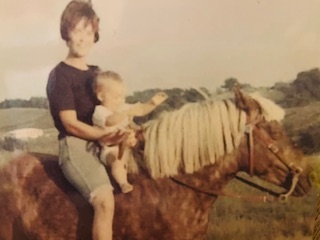
There is a picture of me and my mom that I was too young to remember taking but is my all-time favorite. The backdrop of the picture is our house in northwestern Illinois in a newly formed subdivision aptly named Cherry Dale which came to represent a time of near mythological greatness in our family’s young life. It sat atop a hill, and the bucolic landscape consisted of a rolling pasture populated with delicate pink and white spring beauties, then fragrant sweet dandelions whose yellow heads shone beatifically against their dark green bodies. In our provincial world sat a slightly rusted metal swing set which wobbled like a tottering baby but never fell. I can’t help but think – maybe the world would be a better place if these once universal sets were still a prominent fixture, crisscrossing all locales. At the bottom of the gently sloping hill was a valley of sorts, complete with a weeping willow tree where my brothers frequently played Tarzan and a small reddish-brown barn that housed our beloved Welsh pony, Goldie. As the legend goes, Goldie was given to our family by a cousin of Dad’s because every young family needs a pony to complete the panacea. For years when we would see this cousin (who I fittingly no longer remember her name) we held her in esteemed reverence as the “giver of the Goldie.” Goldie was aptly named when she arrived, and appropriately so. An aura of earthiness, of all that was good in the world seemed to emanate from her. One look in those luminous chocolate eyes with lashes that seemed to caress the clouds, and you knew there was peace and harmony abound. Nothing could make a day more perfect or fix a broken day like time with our golden girl.

This photo is of me and Mom sitting on Goldie and it is quintessentially faultless and of remarkable quality in the early age of snapshots. Although I do not know what precipitated the event, I imagine the sequence in my head. My brothers must have been doing their afternoon duty of caring for Goldie and brought her to the front of the house. I envision Mom was in the throes of domiciliary when Goldie appeared in the yard, but she quickly dropped everything for a chance to hop on her with me. Mom would often leave the house a mess, the kitchen undone for more pleasurable activities, and as a teenager, I found this to be a source of embarrassment. Other moms had very tidy houses; ours was far from it, but my own journey into motherhood taught me to admire this simple revolt against domestic oppression. The other scenario in my head is that maybe the early summer day was as incredibly perfect as those early summer days can be, raw in their birth while the grinding unforgiving winter still haunts a body, mind, and soul. Late blooming lilacs and freshly born foliage not yet baked in the heat hang suspended in the air and speckled butterflies drunk on nectar fly haphazardly in the soft light. So perhaps this day suddenly overcame Mom’s controlled wanderlust, and she asked for Goldie so she could take a carefree romp even just around the yard; that would not surprise me either. She often did brazen impulsive activities that breathed life into mundane routine. To her, routines were made to be broken. A cloudless azure sky spreads out behind us and to the right, the slightly burnt toast colored house makes a striking contrast of blues and browns flawlessly arranged in the photograph.

Those colors are so perfectly coordinated from the sky to the house, to Mom, to Goldie, to a tiny me, it seems almost staged, but this could not be further from Mom’s genetic make-up. At the time of this photo, the early 70’s, it was still commonplace for women of suburbia to wear dresses during the day, or at least a stylish pantsuit and while I do have memories of Mom dressed as such, her clothing on this day reiterates her consistent mutiny against what she was supposed to be. Ironically, her rebellion is not the hippy flower child that history calls to mind, Mom did not even participate in that. Shockingly, she wore what was comfortable. A navy-blue baggy short sleeve sweatshirt piles carefully around her waist and elbow length sleeves hang carelessly on her arms. Cut off blue jean shorts, rolled tightly at the knee are a lighter shade than her sweatshirt and her shockingly milk-white legs dangle loosely at Goldie’s coffee and cream-colored well-fed belly. And she is barefoot; her Geisha-like tiny feet are not even hugging Goldie; they simply hang uncovered in their brashness. The only thing that resembles tradition is Mom’s bouffant hair, piled relatively high in stiff auburn waves that contrast her naked face, but it is her blue eyes that match her shorts, the shirt, and the sky that shine with alacrity. She holds me snugly in front of her, one arm wrapped around my waist and another loosely on the reins. A wispy cap of straw blonde hair covers my head and the yellow bounces impetuously off Mom’s indigo sweatshirt. My eyes are cast down to my hands that are buried, seemingly nonexistent, in Goldie’s lusciously coarse honey colored mane which forever remained a source of wonderment to me. 

Goldie stands perfectly still like she knew the photo was important and would live forever serving as a memory of a life well lived. I can still smell her when I look at the picture like a scratch and sniff in my memory. When we moved three hours from our beloved Cherry Dale, she went with us even though she could not be housed at our new lake property. As a child, it was given that all pets would move with us, including our pony. As an adult, I appreciate the formidable challenge this event was for my parents, but Dad found Goldie a home not far from our house. In exchange for her boarding, the property owner’s children could ride her, and she adapted seamlessly into her new environment. She still had a lovely barn, a pasture, and young ones to live out fantasies in her charge. A lightweight bare back saddle was all a rider needed, more for us to feel like true horsemen. And she always willingly opened her mouth with laughable exaggeration, showing her gargantuan teeth, to slip in her bit and bridle. We never arrived without apples or carrots and when her tender lips grazed and tickled my hand, the sticky slobber working to paste my fingers together made me squeal with glee.Her long Rapunzel tail nearly reached the ground and more than once I begged Mom to let me trim it, but she had seen the repercussions of a style gone wrong on many a Barbie so of course the scissors were far from my reach. Goldie knew her role in our young family and she played it to perfection. She was Silver when my brothers played Lone Ranger, whisking them away from peril, sometimes Trigger untying their hands after the bandits robbed them. She was Bunny to me as I played Little House on the Prairie and made my way to the hay fields with lunch for Pa or to town to the Olsen’s General Store, albeit for a confrontation with Nellie. Whatever we dreamed; Goldie cheerfully provided.

The only difference in Goldie’s new residence versus her previous was the pasture. While ours doubled as a backyard that was always kept neatly trimmed, the new location was a true farm pasture and was often overgrown with an abundance of wild things both identifiable and not. A few times a year, the farmer would mow, but it was often overgrown with an assortment of native plants. Tall grasses with feather soft tips tickled dangling legs and mismatched patches of wildflowers dotted the landscape. Goldie often found herself with fragrant Sweet William woven into her mane, or a crown of clover atop her ears.Intermingled with these idyllic grasses were more threatening species which served as a reminder that although a landscape may appear tranquil, it is never fully tamed. Among the downy reeds were those with toothy nettles that covered jeans like an outbreak of chicken pox or embedded unfortunate bare skin with smatterings of welts. Other similar varieties sliced tender surfaces with thin razor-sharp cuts that burned maleficently accidentally or purposefully. Allergens made up of semi harmless poisons often attacked without qualm leaving us itching and then covered in pink Caladryl. Our red sofa was usually spotted with pink dots and the eucalyptus-like medicinal smell wafted from the cloth on humid days for years to come. But the time on Goldie pre-empted any peril we may incur.

My brothers are older than I am and Goldie would trot and gallop for them, but she would not for me, not even as I grew heavier and bigger which she had to notice as I sat atop her expansive back. For years, when I was riding Goldie, the only way she would move was if Mom walked in front of her. For a while this suited me but as I aged, it angered me prodigiously. Because we often made our trips to see Goldie together, I would be forced to watch my siblings’ charades, my envy seething as they indefatigably romped through the uncut trails while I was relegated to the sidelines waiting my turn with Mom. No amount of prodding with my small heels on Goldie’s sides or clucking and tugging on the reins would make her proceed at any pace. So Mom diligently trudged in front of us, sometimes with a stick to chop down thigh high straw and hopefully ward off any terrifying serpent hidden in the dense vegetation. Though Goldie was typical pony size and in horse terms, about eleven hands, she was taller than my short Mom. Consequently, I felt like Cinderella on my giant steed gazing down at my stableman.

To get Goldie to trot, Mom would have to jog in front of her, and Mom was not a jogger. But, she bore through the pasture methodically, her stubby legs like a hay thresher, chopping the way for both horse and rider. Dust particles flew into the air creating miniature cyclones that plugged our eyes and nose. Even on cool spring days or crisp fall days, the pasture held the heat of the sun which made Goldie slightly lather but drenched Mom in sweat. The only part that did not seem to mind the heat was the unyielding tawny bouffant which railed up and down in the glistening sun like a drill bit ceaselessly working to penetrate a board. Nonetheless, Goldie’s trotting only increased my need for more, so I called incessantly “Go faster Mom, go faster!” And Mom bore down with the might of an Olympic race runner gunning for the finish like her life and honor of her country depended on it. The sprinting of both Mom and Goldie caused such buoyancy, such unapologetic euphoria that in my hubris I often forgot to pay attention to the reins. As Mom ran, Goldie ran, and I bounced, whooped and cackled with glee. My short stick hair blew straight back; my eyes watered from the gale force wind slapping me relentlessly and sheer happiness streaked my cheeks making white stripes on my slightly pink dusty face. However, one fine day during this moment of rapture, suddenly without warning, without provocation, I was on the ground.

I did not land explosively, rather I simply slipped off the oiled saddle and landed with an abrupt thud on the parched ground. However, Mom was so intent on the run, and so obviously intent on finishing the (albeit excruciating) exercise neither she nor Goldie noticed I was absent. Threatening spiky towers of terror loomed over me and vines immediately sprang to life and began to wind themselves tightly around my ankles choking off circulation. Panic swelled in my chest and beat in my head which quickly mixed with fury and embarrassment. Immediately, tempestuous thoughts of an icy solitary night with horrific beasts lurking in the shadows filled my thoughts. I was terrified of the dark and the now eclipsed sun ignited my fear and fury. How could they not notice I was gone? That idea was so unbearably foreign, so insulting to my core, that I began the long, slow, tortured steps to a sheer unabashed tantrum. With painful measures, I gathered my strength to sit on my knees and wail. I howled like a coyote wailing at the moon, and the anger and terror in my own voice startled me. However, it quickly became clear that Mom nor Goldie could not hear me and though their gait was in reality rather slow, it did not take long for them to get some distance between us.

I am unsure what finally made Mom look back, but when she turned her head, our eyes met and locked and what passed I know was nothing less than a showdown of sorts. Instantly, Mom lit up like fireworks with amusement, her face broke into a wide smile, and her body shook with laughter. My angry sobs increased as Mom ever so slowly turned Goldie and their previous jog turned to a languid stroll. It was like a contest of who could cry louder and who could walk slower- both of us determined to win. What a sight I must have been – wide wild eyes peering through weeds, my skin covered in chalky grime and sporadic cockleburs adhered to my clothing and hair; my face drenched with tears and inflamed with rage. Customary of Mom she continued to slow her pace, giggling harder with each exaggerated step which hindered her rescue even more.

When Mom finally reached me, I imagined she would gather me into her arms, cover my stained face with calming kisses, patiently pluck the burs from my hair, then lift me carefully atop Goldie all the while telling me how absolutely precious I was, and would I please please forgive her for this awful transgression? Instead, she met me with even more cackling, more guffawing at both my outlandish outburst and appearance. As I fumed and weakly lifted my heavy arms, exhausted from my own hysterics, she put her hands on her hips ever so deliberately delivered: “Listen, you can lie there bawling like there’s no tomorrow and ruin this perfect day, but nothing bad has happened. Either get back on that horse or sit there crying. The choice is yours.” I sat on the ground and continued to stew; the afternoon sun began its ritual descent and powdery particles from spent blossoms swirled in the air. Insects taunted Goldie and she swatted them nonchalantly with that lovely tail while she munched as best as she could on the grasses as though nothing had happened. She was a traitor too.

Mom sighed heavily, crossed her arms, and just looked at me. At last I stood, ambled over to my pony, and rested my head against her chest, feeling the reassuring thump of her heart. Mom made a make-shift stirrup with her hand which allowed me to clamor ungracefully onto Goldie, and then she lightly patted my back and whispered “that’s my strong girl.”

That’s my strong girl.

Our afternoon ended, and it did not end as cheerfully as it had begun. We gingerly walked back to the barn, all three of us knowing something had shifted in our day. It was like an old party balloon that had lost most of its air and lay insipidly in a corner. But what Mom was trying to teach me on that day, and she continued to teach me, was quite plainly- grit, self-reliance, independence. Obviously, she knew the world could be and often was a very cruel place. I suspect she already thought about a day when she would not be around to rescue me, or maybe even when I would not want her to do so; isn’t that the goal? I am still not sure of that. When I look at the photo of us on Goldie, I am reminded of the lesson, and I remember “you can sit there bawling or get back up.” When Mom died, I felt as if both Goldie and Mom were pulled from under me, and that I was free falling in an abyss that seemingly had no end, no ground. When I did land, I felt so broken; I felt like I didn’t know how to move again, because I still desperately needed her. But also when I look at that picture, framed on my mantle, I feel her, I feel that day. And I get back up, dust off myself, and get on that horse.

Just Gifting

When I taught high school English, during the holiday season we always read the heavily anthologized “The Gift of the Maji” by O’Henry. Set during the Christmas season in 1905, an impoverished married couple, Della and Jim, seek to give one another the most perfect monetary gift. In my mind, every person in public school has encountered this tale but the quick synopsis is that Della sells her long luxurious hair to buy her husband a gold chain for his revered heirloom pocket watch; Jim sells his treasured watch to buy his wife tortoise shell combs for her heavy hair. Obviously, come the holiday morning, both are astonished to find their gifts are useless to one another but O’Henry writes “Of all who give and receive gifts, such as they are the most wise.” I always paused for dramatic effect at this line, and to this day it still gives me goosebumps. But is it true? When we completed this as a class, and I stood in the front of the room bated with expectations of astute insight into the moral of the story, inevitably one student would expound with immeasurable wisdom “Well they are both stupid, why didn’t they just tell each other what they were getting?” Comments as such always deflated my tender teacher’s heart, after all, I was trying to instill compassion, empathy, and the true meaning of giving. However, I came to realize that though not eloquent, perhaps there was something to be said in that response. Maybe what the student meant and could not articulate is – gift giving is hard. Like an innate ability to run faster, or to do math problems quicker, or to play piano by ear, gifting comes easily for some, and not so easily for others. And maybe once again my student was right in that “why didn’t they just tell each other?” But because we all know the hard and fast rules, it is gauche to speak freely about our needs, and specifically, wants. We are supposed to remain mute and the gifter is to intrinsically, telepathically know exactly for what we yearn, and this false premise is wrapped neatly with ribbon in every medium, from advertisements to cinematic productions. “The Gift of the Maji,” I think, remained elusive to many of my high school students who did not see the gifts as sacrifice, maybe could not yet see that Della and Jim surrendered a beloved possession for the greater good of someone they love. Nevertheless, all those years ago upon my first reading, I got it, I connected with it and every subsequent reading left me suffering yet alive with hope for humanity. To cut her hair! To sell his watch! Though sad over the unforeseen outcome, how could Della and Jim not fall more in love with one another? Granted, I have never had to sell my hair but ultimately, I do not find gifting stressful. I am not being cavalier when I say I am one of those people who can find a winning, meaningful gift, most of the time. Perhaps due to an equal mix of heredity and environment, I grew up following my parents’ lead in making things for loved ones, whether at Mom’s sewing machine, the kitchen table, or even Dad’s woodshop. This carried on into my adult life and when I did shop for those on my list, I seemed to be drawn by invisible forces to a most satisfying purchase. In my life I’ve learned that this is an anomaly.

In the yuletide season of 1984, as a junior in high school, I had my first real boyfriend. There were several couples that populated our small circle and the fervor of the festive season gripped one and all; the underlying electric current of competition was strong. What girl would receive the most coveted offering from said boyfriend? What girl would walk into the holiday basketball tournament and make all others seethe with jealousy and feign admiration? Not only would she be wearing new Gloria Vanderbilt jeans and an angora sweater but maybe, just maybe, the sacred sweetheart ring. Alas, this was not me. Not only did I not get the ring, but I also didn’t get the outfit. While Mom had no gifting qualms for my pre-adolescent self, my teen years appeared to suggest a problem. Early December I shopped with Mom at the mall and took her to The Limited and pointed to very specific clothes that made me pale with longing. Come Christmas, as I carefully unwrapped the packages already picturing myself walking into the basketball gym in an ensemble fit for the cover of Seventeen, would be something I had never even seen before, often too big or too small, too scratchy, too ugly, and maybe even an Alfred Dunner from Sears. Crestfallen, of course I gave thanks, but in a weak voice bemoaned “this is not what I showed you Mom.” And her casual rushed reply: “Oh really, you know they always move those god damn clothing racks around. You know I hate going into that store. Music is too loud, and everything is ugly, snotty salesgirls.” Strike one. I sighed heavily, hoping I could muster the courage to ask later for the tags, or the receipt (usually lost) so that I could not only exchange the clothes but get Mom took take me to the store again – both feats were a difficult task. Her beleaguered response was always “What’s wrong with you? It’s nice. Just wear it.” Gas was up to .89 a gallon and one could just not run to a store thirty miles away for something so trivial, and in my parents’ eyes as free as I was in the 80’s, I was far too young to navigate the route to the mall alone, even though of course I knew that route by heart and hundreds upon hundreds of other routes and miles I traveled pre-Draconian tracking devices, and made it home just fine.  

Still, I still held out hope for the boyfriend’s gift. In anticipation, I prepped carefully for the holiday; I dressed judiciously in my pinstripe wool trousers that irritated my skin and made my waist break out in an angry rash, counterfeit cashmere sweater, short black pumps, black nylon knee highs that didn’t soak up sweat so my blistered feet constantly went from a state of freezing to frozen. My eyes were not short of shocking blue shadow and eyeliner which I anticipated would cascade down my jubilant face, but it would be worth it. I spared no expense on the slathering of Love’s Baby Soft and a full shower of Aqua-Net cemented on my hair. When the boyfriend, late as usual, arrived for the celebration, I tried not to let his attire of a disheveled summer basketball camp shirt, faded Lees, and high top dirty whitish tennis shoes discourage me from the impending exchange. With my hard-earned babysitting money (and at $1 an hour for the most monstrous children) I purchased a state-of-the-art ghetto blaster that took no less than eight D batteries (gifted separately from Mom as I ran out of money). It was an extravagant gift but meaningful, purposeful and useful. He had no blaster, and no FM radio in his vehicle, the former family Chevy sedan. In my mind, I could see us cruising to no destination with the windows down, his arm draped casually around my shoulder while our favorite artists crooned love song after love song. Gone would be the days of farm reports and sporadic static from the only AM rock station. Also for him was a plush Hagar the Horrible doll which was a beloved comic strip of ours as already I could see the personas playing out in our young relationship. Hagar represented the blustering figure of typical toxic masculinity while we all knew his wife Helga really ran the show quietly, demurely, and smartly behind the scenes. Honestly, both gifts were flawless: one of dire need and one of our symbolic futures playing out seamlessly.  

He handed me the first present, unwrapped, but it was an artful heart-shaped candy box which I immediately recognized visually and olfactorily as straight from the local apothecary; Decks Drug Store. The box smelled like Decks looked- lemon polished wood, syrups of all flavors for any kind of soda that mingled amicably with the tester of the heavily sought after and scandalously labeled White Shoulders cologne. In the store, rows upon dizzying rows of tightly wrapped boxes of confections turned out year after year were displayed in venerated outbursts of seasonal décor beckoning the lackluster gift giver, like a siren’s song to a sailor of yore. The box I received was of distressed red, as if one side fell asleep in the hot afternoon sun while stiff plastic variegated pink poinsettias erupted voraciously from the middle, trying with all their might to spring free from the suffocating yards of cellophane. Enclosed inside, of course, was chocolate but not just any chocolate; enclosed was a confined stale assortment, each filled with something dreadful and secretive. I did not even like Twinkies or Ding Dongs, let alone synthetic bonbons filled with oozing and gushing varieties of deceptively labeled fruits- dishonest coconut, cherry, strawberry and the like wept from each piece like an open wound, and at that time I felt, like my wounded soul. For many years of courtship, come any holiday, a box of chocolates (sometimes heart shaped sometimes rectangle) filled with globs of false promises made its way to my hands; I professed undying thanks, and the candy went to my less picky brother. Mind you, I ate with this boyfriend all the time, so it remained mysterious to me that he never once saw me eat an unpredictable piece of confection but thought it a sure gift for me. Nevertheless, the next present he placed in my trembling hands I thought would be the crowning glory of gifts, the one that would make me shine in front of the other girls. I imagined the delicate gold ring, encircling my finger with years of blissful joy beckoning from it. Laying in the box, however, was a necklace. From a dull too long brass chain, hung a small heart locket, etched with the tiniest lines and an even tinier diamond chip that I had to squint to make sparkle. At this point the boyfriend chattered incessantly on how I could go to the store and get his picture in the 2×2 millimeter locket, and for many years he would occasionally ask “did you get a picture in that locket yet?” For the safety of the relationship, I went to K’s Merchandise Mart and inquired as to doing so. I can still see the saleswoman look regretfully at me, in the sisterhood of misbegotten gifts given by relatively sincere boyfriends and say, “getting the picture would cost more than the necklace and you couldn’t even make out his face.” I did not shine at the basketball tournament, my necklace paled in comparison to the siege of trumpeted rings, cubic zirconia earrings that shone effervescently under fluorescent lighting, and designer jeans galore. But I wore my necklace authentically for years to come, even when it took on a brackish hue, and continued to swear to the boyfriend I was looking into getting his photo in the locket.

Eight years later, I married that boyfriend and while I no longer wore the heart locket, it did remain safely tucked away in my jewelry box, next to the slightly bigger heart necklace with slightly bigger diamond chips I received as a wedding gift. I glanced at both every so often and hoped it would serve only as a reminder when my wants were misunderstood. Alas, I was so very wrong. When I recall these times, I often think of the curmudgeonly old minister we were forced to meet with in order to wed. For whatever unreasonable, petty, patriarchal reason, we were required to have his blessing to proceed with our lifelong plans. After a series of probing questions of what I can only assume are akin to being interrogated for a crime we did not commit, this killjoy declared our differences too great and suggested we go our separate ways. Though upsetting, he was only a fleeting irksome blip in our history, and his false prophecy now makes me snort smugly. I cannot recall what specifically made him declare us unfit for marriage, but I do remember discussing holidays so perhaps it was our differences in celebratory practices that caused him to deliver such abysmal advice. Nonetheless, a soothsayer he was not, thus we began our life together. The Christmas after our first child was born in October (seven years into the marriage), we were much like Della and Jim; monetarily poor but awash with even more devotion. Mostly because my husband insisted, we decided on a small exchange within budgetary reason. I swore I was fine with the baby as our gift such was my bliss in our long awaited child. However, he eloquently reasoned we should give one another some token of our continued steadfast commitment to commemorate this auspicious holiday. During sunrise as we basked in the glow of our family of three and gazed at our perfect child, my husband handed me his gift. I gently teased him about the haphazard wrapping and copious amounts of tape, and as I finally got through to the gift, I discovered: bathroom scales. The wish of every postpartum mother. To his credit, he immediately read my face and quickly clarified “You always comment as to whether the baby has lost or gained weight, so I thought. . . “

“But these are not baby scales.”

“Well, you see, you get on the scales and weigh yourself, then you hold the baby and weigh, then. . .you could keep a calculator beside it.”

“I understand how it fucking works.”

Some years later, after a range of gifts that hit the mark to those that continued to perhaps be for someone else, I discovered bracelets that the wearer could adorn with an absolute infinite number of beads- I mean millions of charms in dizzying assemblages of colors, combinations, and themes. You name it, the manufacturer has a bead for it. Finally, eighteen years and four kids into the union, I frankly said to the hubs, “buy me these until I tell you to stop. I mean it, every holiday, one or two beads. Please. For real.” We had a solemn discussion on imposter bead syndrome; in a hushed but stern voice I warned him not to be bamboozled by faux pax jewelry (he didn’t listen, that one went to Goodwill and was not replaced). As expected, it was a slow start. For one, he told me later he didn’t think I really meant it when I said to get charms for every holiday, and number two, due to the vast amount of bead designs, try as he might, he could not keep track of what I had and what I didn’t have, except for hearts. He never grew tired of hearts. My husband frequently relayed the trite standby assertion “it’s the thought that counts;” and I always retorted “not if there is no thought.” These difficult conversations always left us at a stalemate which only passed when one of us left the room (usually me). Moreover, again, we are not supposed to state directly what we want, after all, there is “no joy in opening exactly for that which you asked.” I found this statement to be very wrong in a myriad of ways. Even so, I remained faithful to my plan, and he remained aloof and resistant to this direct approach of giving.

Early one spring I was hanging new curtains in our living room. As I stood on a ladder high above the china cabinet, out of the corner of my eye, I spied a small, delicate pink bow barely perceptible as it sprouted like a fledgling flower under copious amounts of dust. My heart, like the Grinch, grew two sizes at once as I realized the shape under the bow was unmistakably a bracelet box. Finally! With Mother’s Day on the horizon, I would feign surprise over this most delightful endowment, and I would finally be on track for a lifetime of trinkets and bangles. However, holidays came and went with devastating consequences and defeat; each occasion that year left my wrist unadorned and me longing for the coveted container still on top of the cabinet. Mother’s Day was the first to arrive and as I awoke to sunlight spilling into the room at 5am, I heard my husband pull from the driveway. Besides being adept at gift giving, I am also blessed with unbelievable witch like intuition for I knew immediately he (thought) he had no gift. An hour and a half later, he arrived home. To allow him to continue his charade, I watched him clandestinely from the window as he unloaded his car of flowers and balloons, (and a case of his favorite beer) all of which bore the unmistakable trademark of Walmart Super Center. At least he was there when it opened.

My June birthday was the next to arrive and since our birthdays are exactly one year and one day apart, it has always been a celebratory favorite of ours, though not without its hardships. This particular year, I planned the most delightful outing which consisted of dinner at the authentic Hibachi grill and an evening under the stars at the outdoor muni, all of which would be the first for our four children. During dinner though, the hubs got into the Sake and Sapporo beer which combined with a full course meal made for a difficult evening of concentrating on Seussical. But no matter how hard he stared into the side of my face and flagrantly tapped his phantom wristwatch when he caught my eye, I refused to leave the show, even when the youngest fell asleep on my arm and the interest from the other three waned. It was the most marvelous night and as we drove through the purplish midnight hue, I dreamed of the bracelet to come. Alas, when we arrived home the hubs fell quickly and steadfastly asleep in the recliner while I bustled the children to bed. In a lackluster presentation at breakfast the next day, I received a Precious Moments figurine of mother and child- a near replica of the one I had received a few years ago. If the hubs noticed the identical twins standing side by side on my dresser he never let on, though I frequently lined them up in his direct line of first sight.

The next holiday was our anniversary, the most prized of all days, and surely, surely said bracelet would be mine. I must admit though, I was becoming a little weary. All the anticipation and subsequent letdown was starting to take a toll on my normally gregarious self, but I was not one to give up hope even on the darkest days. Nonetheless, when the doorbell rang and I accepted the outrageously expensive Pro-Flower delivery, guaranteed to arrive within 24 of calling, and while Mom “tsk-tsked” and deadheaded nearly every bud from the limpid bouquet, I still clung to my faith like a true believer. But when I sneaked the chair to the cabinet, peered over the edge and I saw the bracelet box covered in more debris than before, it was just too much. Something in me snapped and I knew, I just knew I had to plan. I had to get to the bottom of this peculiar guest sitting guardedly atop my cabinet.

That plan came at Christmas, almost an entire year after the discovery. When the children were finally nestled snug in the beds, and the hubs in his chair, I crept to the cabinet in my most superior cat-like movements and prepared for a covert heist. As I tenderly lifted the still waiting, still waiting bracelet box, dust flew and clogged my nose sending me into a dizzying spiral of sneezing. I dropped to the floor just in case a house inhabitant should investigate but the only one who came was the Sunny the dog. He licked my head and set about impassively and without disapproval watching me crawl to the stockings hung by the chimney with care. Kindly, I inched the box into my (sigh) barren stocking and glanced at the other stockings laden with goodies. Then I sneaked stealthily back to bed, and Sunny lay down, coolly guarding my secret forever. I felt like a child; I was so anxious I could barely sleep.

Christmas morning dawned with a promise of new beginnings, of cherished hope, and requited dreams. The bathroom scales debacle was a distant nightmare. As the children finished their stockings and patiently awaited the mecca of gift distributions, I paused and exclaimed “Oh wait! Mommy has something in her stocking!” The children cried with glee, “Mommy has something! Santa finally remembered Mommy!” Their eyes glowed vibrantly with anticipation and pure innocence that can only radiate from children drunk with holiday euphoria. I slowly drew the dust free present from my stocking and with flair opened the long-anticipated treasure. Jumping up and down with exaggerated enthusiasm I exclaimed “it’s a bracelet! It’s a bracelet!” The kids encircled me like I was the fire in the center of a circle pagan ritual and chanted “yeah Mommy! Yeah Mommy!” Yet, when I stole a glance at my husband, his stoney face was devoid of joy so while the babes set about making piles of presents, we stole into the kitchen and I quickly shut the swinging butler’s door to muffle our voices. Still jubilant, I cried “Don’t you love my bracelet?” while I jingled and jangled away.  Then, he moved dangerously close to my personal space and intensely whispered:

“You shouldn’t make such a big deal about buying your own gift and stuffing your own stocking.”

I was momentarily speechless. Absolutely speechless. And I fumed hotly with indignation. I felt like I was in my own personal Circle of Hell; the Ferryman kept chauffeuring me to a spot that was saturated with rotting fruit and stale chocolate which washed over me in mass. Statues of decapitated mother and child littered the ground, thousands of headless stuffed animals both store bought and won at carnivals dangled from the rafters. I could not, I could not have this future anymore! And then I stepped dangerously close to his personal space and I loudly retorted:

“That gd bracelet has been sitting on top of the cabinet in the dining room for nearly a year. At least a year! Maybe more- I discovered it when I changed the drapes. Is it for me or not?”

And with that final delivery, that final blow, I saw in his face slight recognition that he visibly yet sheepishly tried to hide. Quickly he turned and dimly replied, “Oh well, yeah, it was.”  Then he instantly left the room under the pretense of “getting back to the kids for Christmas.” 

After this incident, things became easier between us as it was certain I was and would be the all-time victor- like a gladiator who championed the Coliseum, the year of the bracelet would live forever in our house. Even so, some holidays since the bracelet incident have been easy, but some have still been hard. One year, the hubs was traveling to Vegas for a computer industry conference over our anniversary, and when he returned home he handed me a box that could obviously contain nothing more than a coffee mug. I sighed resolutely and muttered “Oh another ‘I heart cybersecurity’ cup, or maybe even ‘cybersecurity rocks.’” The hubs stomped his foot and told me to open the damn box. However, inside was not just any coffee cup but a signature Micheal Jackson Cirque du Soleil mug, complete with a (not heart) bead tucked sweetly within. But, just last summer, I overheard the hubs say something about his birthday to our oldest (at age 25 a few years from that bathroom scale Christmas), and when said oldest child came into the kitchen, I asked “What did Dad say about his birthday?”

“Dad said he doesn’t want another fucking shirt for his gift.”

“Well march right back downstairs and tell him he’s getting a GD shirt and that is that.”

Then we laughed.

I still adore “The Gift of the Maji,” and always wonder how Della and Jim lived out the rest of their lives. I always hoped Della was able to grow out her hair and use the combs, and that if Jim didn’t get his heirloom watch back, maybe he got one that he could begin with anew. At heart, I am a dreamer, a romantic through and through. But moreover, in all honesty, I hope Della and Jim were able to joke about the holiday when they tried so hard to please one another and reflect with nostalgic fondness over that confusing and trying time in their young life. It may not seem like it, but gifting is never about greediness; it is about being seen, feeling loved and feeling understood and this doesn’t happen quickly; it takes time and patience and then even more time and patience. However, I am sure if their life was anything like ours, their lives only got richer, and not because of the gifts and not because of material goods, but because of what they learned along the way. “Of all who give and receive gifts, such as they are the most wise.” Indeed O’Henry, indeed.


Just Grief

It was during graduate school and my first feminist literature class that I truly began to give serious thought to lives of women and the impact of female relationships on me and on others in general. After studying many novels, I was able to draw conclusions from textual evidence and see if what I was learning was applicable and practical in real life. Suddenly fictional characters seemed more real and identifiable. I wondered if I could ever be as strong as my beloved heroes I read, such as Offred in The Handmaid’s Tale. Both the novel and the characters gripped me tightly. Could I survive complete systematic violent oppression? I was so young when I read the novel the first time and it was hard to see how my life could fit into such a seemingly farfetched dystopian tale. At the time, I thought I knew a lot about life, grief, pain. I thought I understood love, friendship, and relationships. It turns out that at age twenty-two, I really did not know much about anything. After college, I continued to gravitate to books that feature female heroes and I continued to silently examine interactions of women I knew and even those I did not know. As I transitioned into married life and motherhood, I realized I did not have to live in The Republic of Gilead for survival to be meaningful and extraordinary. I realized I often failed to see how everyday life is charged with invisible trials outsiders know nothing of, battles fought alone and in silence. After a time, I came to realize that heroic women are not just in novels or on the cover of magazines. Strong women are and were a constant in my life. I never realized how much this is true until in my own time of desperation, my own tests of survival, two women saved me.

Part I

Fern is the mother of my lifelong friend, Michelle, and Fern died in 2005 after a long, ugly bout with Alzheimer’s. But what bout with Alzheimer’s is not ugly? No number of notes above the thermostat or reminders of where household items were located could deter the disease that stripped her of her life. Though I tried hard to erase the vision of the last time I saw her, I could not. The stark white hospital bed in which she lay seemed like an enormous white whale determined to swallow her whole and she became smaller and smaller each time I saw her, until she seemed a speck in a vast snow drift. She reminded me of the apple lady doll my mom had sitting on the hutch whose face was so sunken and withered it was barely recognizable. As a little girl, the doll frightened me, but I was drawn to both its grotesqueness and familiarity and this feeling stayed with me while I sat by my silent friend and the visions stayed long after her death. To say Fern was like a mother to me is an apt cliché but it does not really capture our relationship. Even though we were bonded through her daughter Michelle, our companionship went beyond that. Fern’s house was one of my frequent stops well into adulthood and long after Michelle moved away. Many of these stops were at times of crisis in my life, and I found my way to Fern’s couch and her shoulder. I could not wallow in tears for long though because such outbursts were not of her character. Fern was practical to the core. She did not coddle me but said things such as “well that is a mess. What do you think you ought to do?” and “get up off the couch and quit bawling.” These questions and commands often ended with a quick hiccup like giggle and a spark in her eye. It always made me pause for a split second to consider the problem might not be as bad as I thought. When I got older, I realized that in her own young life, with a busy large family, a sick husband, and an unexpected newborn, she simply did not have time for emotional proclivities or theatrics. People like Fern, and my own Mom, met challenges with a calm ferocity and stoicism that appeared instinctive, drawn from an inner force I had yet to, or maybe never would, acquire. Fern was widowed not long after Michelle was born and Michelle’s siblings were nearly raised at the time of her birth, so for quite some time it was just Michelle and Fern. This was the opposite of my house and an anomaly in our larger friend circle, but I often found myself marveling at them. Michelle seemingly never had to share her mom and when I was with Fern, I did not have to share her either. Again, it took my studies in feminist literature to realize that what I admired most was their freedom and when I was with Fern, I felt that same sense of independence. My nuclear family was a solid representation of the time. My mom worked on a regimented schedule that centered around when my dad would be home from work; breakfast at 7am; dinner at 6pm, family television at 7pm, snacks at 9pm. The one-on-one times with my Mom were limited and when they occurred, I voraciously clung to them and often cried when they were over (I should add the crying annoyed my mother a great deal). While I loved my idyllic life immensely and the safe comfort of the routine, I remained in awe of the self-governance and undefined schedule under which Fern and Michelle lived. Fern believed that a lot of life’s troubles could be fixed with a long rambling drive to nowhere in her navy blue two door Monte Carlo, a respectable meal at the local Moose Lodge, and a good stiff 7&7. Soon, I came to realize she was not entirely wrong about this remedy. Although I am sure she was often disappointed or angry with me, Fern did not let it show. She was fiercely protective of her children and, by extension, me. She was the last girlfriend to set me off down the aisle on my wedding day; she is the one who straightened my train, fluffed my veil, and kissed my cheek before I took my dad’s arm.

Between 2013 and 2014 I spent eight weeks in the hospital. What I thought was food poisoning from a raunchy soft-shell taco, turned out to be a sudden and vicious colon perforation followed by a series of medical misdiagnosis, mysterious maladies, and perhaps plain bad luck. Peppered around the intermittent hospital stays were endless doctor visits, tests, pain, anxiety, and sleepless nights. I was never healthy during this time, physically or mentally. One tense miserable night resulted in a midnight rush to the ER where a scan revealed an internal MRSA abscess on my recent surgery site. Hospital staff went into high gear; I was immediately isolated and anyone who walked into my room had to don gear that resembled hazmat suits. In the subsequent years of the COVID pandemic, these practices became commonplace. However, at the time it was unusual, and I felt like a freakish midcentury carnival side show. Even hospital personnel seemed more comfortable gawking at me from a safe distance and I craved the constant comfort of human touch my previous life held. While I tried to remain positive, I missed my normal life desperately and often felt unbearable fear, dread, and loneliness. The saying is true that I did not miss my robust good health until it was gone.

During this hospital stay, I was plagued by ghastly nightmares and drenching night sweats. Looking back, those nocturnal sessions were very much my own Nightmare on Elm Street. Though not clearly formed like the hellish Freddy Krueger, dim shadowy beings filled my room regularly like Dracula awakening at sundown. They were terrifyingly faceless and made up of impenetrable blackness. I was always in that state where I hovered over my physical self, but I could not wake nor move, nor scream to escape. I felt suffocated; the panicked sensation of being pinned without air was ever so vivid, and growing up on a lake with strong rambunctious brothers had taught me that feeling. The call button was a mere inch away from my hand, yet I could never reach it; over and over I willed my fingers to grasp it, but paralysis invaded my limbs. I know I cried during these terrors, and I pleaded with myself “wake up now, wake up now,” however I could not, or worse, I thought myself awake and felt instant relief only to realize I dreamed I was awake. And the blackness was always still there, gnawing at me, swaying back and forth at the foot of my bed, hovering above me in their phantasmal shapes. The length of the nightmares seemed indefinite though I really had no sense of time, only that intense menacing visions arrived without fail when I slept. It took more and more effort to come out of these dreadful occurrences, but when I did, I was always completely drenched. My hair was wringing wet, my nightgown soddened. Not one piece of bedding was dry and every night I had to ask for a fresh gown and linens. Due to hospital protocol, I was supposed to wait for the nurse to change all items, but the longer these fiendish sessions lasted, the more lenient the night staff became, and they began to put fresh items in my room for me to use instantly upon waking. It was like shedding a snakeskin – I could not peel off the layers fast enough and I was repulsed by the dirty laundry on the floor, the reminder of the horror. Daily the infectious disease doctor visited me, and he always asked if I suffered from any night sweats. Had I been more myself, I might have commented on his apparent idiocy but daily I replied “yes,” and recounted the wretched night. He patiently made notes in a cheap modest spiral notebook with his tiny #2 pencil that looked like it was stolen from mini golf, and eventually I came to think he was writing a grocery list since nothing ever changed in protocol. Upon leaving and in response to my relentless questions, he always faintly and scarcely patted my arm with a thickly gloved hand and mumbled, “We’ll see” through his mask. These routine visits left me more uneasy and more fearful. There were no answers to my condition, and I grew thinner and weaker by the day. I often refused to Facetime with my kids as my own now gaunt gray face disgusted me with its dull eyes and tube hanging from my nose like a gruesome translucent worm. My spirits plummeted and I even became too fatigued and dispirited to text, which had become my lifeline to my family.

One night as I drifted to sleep, darkness again invaded my room. My limbs were leaden and all I could do was lie in the bed and watch the shadows creep. All light was squashed, and the maliciousness came slithering into the room with sinister ease. As I struggled without success to raise myself in the bed to somehow flee the ominous invasion, Fern suddenly appeared in my room. Hazy violent violet shades that mimicked fire flickered around her but could not touch her. She was as real as the bed in which I lay, and I fought to call out, but I could not; I remained mute and cemented. Fern was perfectly dressed in her hot pink two-piece suit that she wore to Michelle’s wedding, and she was exactly as I remembered her. Oversized owl-like circular brown glasses rested on the tip of her slightly upturned nose. Tightly gray permed hair coiffed perfectly atop her head. A delicate Timex watch and thin gold bracelets hung loosely on her slight white wrists. Her elbows curved up a tad, like they wondered where the heavy purse was that she always carried in the crook of her arm. I could see her white hands streaked with a road map of blue veins, hands that I so often saw gripping the steering wheel, patting my leg, holding her Seagram’s. I could see her mother’s ring with five birthstones flashing brilliantly like multi-colored emergency lights penetrating the night on a deserted highway. A small, rounded hump typical of her age spread across her back which made her shoulders pitch forward slightly. She stood in her sensible thick heeled chocolate brown shoes with her feet spaced apart as women do when they have more to worry about than looking statuesque, and the stance was unmistakably formidable. It was how she always stood, especially when she was serious. And as I was absorbing her presence in this split second, she spoke. In in her stern yet everyday steady voice, one I had indeed heard hundreds of times, she said “Leave her alone.” That was it; three words. Three words said plainly and directly, just like she used to command the invasive stray cats to leave her garage. Three ordinary words, words like I had heard her say when a rowdy teenage girl slumber party went wrong. She did not raise her voice, scream, or show fear. “Leave her alone.” Then, she was gone. As swiftly as she arrived, she vanished.

And the blackness left. It disappeared and it did not return.

I did not spring out of the bed miraculously healed. It would be two months before I would vigorously refuse the standard wheelchair exit and walk out of the hospital on my own. And another month after that before I left the surgeon’s office for good. But I slept. I slept without fear, without terror, and without anxiety. My night sweats also stopped, and the short yet momentous event played over and over in my head. The memory of the blackness still sent a ripple of nauseating fear through me, but immediately picturing Fern created a sense of peace, and of power. Not surprisingly, the infectious doctor took credit for my relief, and I let him. Sometimes it’s what we do, isn’t it? He would not understand. Immediately after seeing Fern, I texted Michelle about the visit; Michelle did not doubt my experience because she knew the force behind her mom, behind my friend Fern. But she did ask me how her mom looked, and I straightaway reported “Radiant, like the day you got married.” I was so glad to give Michelle that information and I felt her unspoken relief in my own heart. “You’re so lucky you saw her,” Michelle said. “Yes,” I said. “Yes I am.”  

Part II

My first, best, and most loyal girlfriend, my Mom, died on April 10, 2021. Eighty-nine days after her doctor called me with the terminal diagnosis of the mystery of what ailed her. Eighty-nine days of hoping against hope as I watched Mom vanish before my eyes. With merciless ferocity the disease ransacked her and possessed her with unforgiving fervor; every time I saw her, she lost something of herself. Her once rounded back, much like Fern’s, quickly shrunk into her emaciated frame until pointed shoulder blades protruded wickedly like stalagmites rising from the floor of a cave. She began to turn shades of yellow and purple that make-up could not mask. Mom was not one to obsess with appearance, but she kept her lipstick in her pocket to cover the increased Goth-like bluing of her lips. The heirloom rings she proudly wore slipped about her fingers like a ceaseless demonic merry go round. The more she corrected their positions, the faster they fell; the more they slipped, the more bruised her fingers became until the bruises themselves mimicked cruel rings. And she was so very cold, all the time. It settled in her bones like an unwelcome guest and I could not stop thinking about my inability to make her warm; it was one of my many, many failures during those eighty-nine days. I wanted to bring her comfort, but I didn’t know how. I wanted to curl up against her and cry. I wanted her to comfort me as she had done my entire life, to pat my back and say, “that’s enough now, let’s just go on down the road,” but this seemed too much to ask, much too selfish of me. What’s more, I knew she would have done what I asked, but it was me who should have held her and gently patted her back. Again, it was more literature that also consumed me; Dylan Thomas’ poetry ran relentlessly in my head: “Do not go gently into that good night. Rage rage against the dying light.” I could not remember much else about the poem, but those lines followed me everywhere, every day. Then I would see Mom, and I would see the hollowed-out shell of what she was; I saw her evaporating, and I wanted it to end so she did not have to become this imposter of herself. I looked at her the same way I looked at Fern- with defeat and disbelief. I was wrecked with hopelessness in the face of my personal doomsday clock. Then, the 90 seconds ran out and my Mom, died. My world imploded and exploded – my mentor, my friend, my champion, was no more. After she died, I found myself saying “Mom fought hard,” and I know people say this frequently, but I hate the saying and hated hearing it spew uncontrollably from my mouth. Because in the end, there really was no fighting the disease that claimed her. She did “rage against the dying light,” but because she “would not stop for death, he kindly stopped for me” (Dickenson).

Those eighty-nine days and the days thereafter obliterated me with grief. A seismic shift in my world occurred and for some odd reason, I kept thinking not about literature but my college geology class, which Mom made me take, and the professor’s lecture on the immense destruction caused by shifting tectonic plates. At one time (more like 250 million years ago) the world was covered by one continent; the shifting and continual shifting of plates made Earth as it is today. When plates come into contact, catastrophic natural disasters can occur. That is how I felt about my world. I was one whole person with my Mom and now I was not. Immediately I felt estranged from anyone and everyone whose mother was living. I was once Pangea and now I was a separate continent and I felt continual internal savage shifting. Often without warning, my plates moved, and I wept with intensity I had never known, including when I found myself consumed by my own illness. Sometimes these eruptions occurred as I drove to work, and my vision blurred from tears that scalded my face so much that I had to pull to the side of the road. Then the anger would come; anger cooked in stomach and not only threatened the tiny breakfast I managed to consume but threatened my routine sanity. This was not how things were supposed to be. After combating to compose myself, I drove on to work, faced my class, and went about the now absurd task of teaching composition. I wondered if the students could tell I was orphaned. I assumed everyone could see it. “There she goes, the girl who just lost her mother. . . there she goes, the motherless girl. . . there she goes, the poor dear.” I assumed everyone could see the jagged scar that tore through me, exposing my misery. It most certainly had to be visible from the inside out. Yet, that was not even the worst, the worst was the barren expanse before me: life without Mom.

It was again my sleep that suffered during Mom’s illness and subsequent death. It was fitful, limited, and restless. Though I was surrounded by people enduring the same wretched loss, I felt imprisoned in my own solitary confinement of grief. Sorrow and emptiness pervaded my nights, and my pillow was often damp with tears I did not realize I had shed. I woke so much I thought of my days as a young mother, always on alert for my crying baby but, it was my own weeping that woke me. When sheer exhaustion won, when I did sleep, the reality of the abandonment I felt met me with brutal force moments after opening my eyes. The bit of refreshed peace I gained from resting was erased as I remembered my Mom was dead. However, sometime after the funeral, as I lay in that dreamless, agitated state I felt something different in my bedroom; I felt something even before I opened my eyes, like something pushing me gently to the surface of wakefulness. My normally chilled room was ablaze with warmth, and I experienced a sense of calm that had long been absent in my life. The aching emptiness that imitated true physical pain was unexpectedly gone. These intense feelings raced at me as I struggled to come out of the confused drug like sleep. When I opened my eyes and labored to sit, I saw my Mom at the foot of the bed.

She was smiling and smiling hard. It is funny to think of it because her smile for photos was always forced; she hated having her picture taken so it was only the surprise candid shots that captured her genuinely happy self. And that is the smile she made. She also wore a sweatshirt I had not thought of for years. When we shopped together and had spent too much money, but I wanted just one more item, Mom justified the purchase with “Well, okay, but we have to share it.” That normally meant the item spent 98% of its life with me but this garment, a long-outdated favorite, had stayed in Mom’s closet and now it was on her. The cream-colored oversized sweatshirt emblazoned with our much-loved sunflower pattern covered the front. Billowy hazy clouds partially covering a blue sky with a glittering sun made up the background of the decal and at the height of the 80’s, I loved it. I always felt confident wearing it and it was a perfect staple of my (our) fall wardrobe. Often Mom would ask me to bring it home from college so she could wear it; often I would forget, and she would feign anger and our ownership banter started over. At that moment, in my room, she stood slightly hunched and leaned to the left as she did during her signature gut busting cackle. Her hair was styled as it was in the height of the 80’s: permed full to fuzzy curly in a bit of a mullet and peppered with gray. In this briefest of moments, all I could do was stare; I was enchanted by her presence. And I felt love. Of course, Mom loved me as she lay dying, but again, those short three months were so horribly and shockingly complicated. We received the death sentence, and Mom got in her chair, and there she sat. Delicately dancing around the imminent end seemed to suit us both better. There were no Hallmark moment confessions, no last-minute questions answered, just hanging on, day by day, and hoping for one more day over and over, until there were no more days with Mom. Plus, I could not help but think if we did not say it, if we did not say death, it would not happen. I told her every day I loved her, but that was not anything different from our normal daily conversations. “I love you Mom,” was always followed by a nonchalant wave of her tiny hand and a “yeah yeah. See you later.” So, when she stood at the edge of my bed, laughing, full of life, full of love that radiated and exuded from her, this was the Mom I knew. This was the pre-89-day Mom. As she stood before me, her eyes shone brightly, her body was completely full and healthy, and sheer delight permeated the room. All in that fleeting moment I was trying to think of when I had seen her so joyfully happy and while I was both dumb struck and awe struck, she said “I love you,” then she was gone. I lay in bed the rest of the night pleading silently for another return, but my room remained empty. However, the next day was different for me. What I thought was permanent despair began to dissipate and I began to think I could “go on down the road.”  The next night as I began to awaken from a surprisingly peaceful sleep, but before I even knew full consciousness, I heard myself mumble “Hi Mom.” It felt like when I was a child, and sick, and Mom would appear at my bedside with a cool hand on my forehead before I even called for her, before I even knew I needed her. Through my window shone a blinding light that forced me to squint as I tried to open my eyes, and as I lay in bed, unexpectedly the light washed over me, it ran through me, and then it was gone. In that moment, I felt my Mom. I felt her touch, her embrace- everything I knew about her passed through my senses. I felt what I had longed for during her illness but could not ask of her.

I struggled to make sense of what had happened but there were no rational explanations. What I came to eventually realize is that I no longer felt that original shattering ache and loss that began with Mom’s sickness. The seizing uncontrollable outbursts stopped, and I felt less damaged. I felt like I always did when my Mom rescued me from whatever ailed me; I felt cherished, whole, and strong. It was not like I still did not ache and miss her infinitely, but I began to consider that I could face this bizarre future without her. I thought again of Pangea and how the world has survived the chaotic disruptions and remains habitable; just maybe I could be habitable too. Over and over, I have asked her to come to me again, but she never has. She has been in my dreams, but I awake from those with fragmented memory; I know I have seen her, but the kaleidoscope like images are disjointed and nonsensical. This is the opposite of her visit. I remember with stunning clarity her visit to my room and less about her in the clutch of death. I remember in stunning clarity when she passed through me. The truth is, I do not feel that same acute grief as I did when she died. Often, I long for a cathartic cry and it will not come which ironically leaves me a bit shaken and deflated. But every time I feel this, I see her at the foot of my bed in that sunflower sweatshirt, I see the light outside of my window and I feel an odd, inexplicable, sense of contentment.

It is not lost on me that my physical and mental ailments may have manifested into life-like hallucinations. It is not lost on me that in both instances I was in a state of an existential crisis and suffering from fear and agony I had never known. I have contemplated looking at an astronomy chart to see if I could figure out what celestial event occurred outside of my window; could I research a meteor shower that might have occurred that fateful night? Should I go back and research the array of medicinal cocktails Dr. Frankenstein prescribed for me? Lurking in my rational mind are explanations for my experiences. I do not disagree, but I do not believe them. In The Handmaid’s Tale, Offred does not survive solely by her own wits; she is aided by others around her, and she is forced to rely on situations she may not fully trust to survive, which makes me think of my own experience. The events are on repeat in my head, I watch them constantly both in times of ease and despair. With every playing, I come to the same conclusion: these two women, in my greatest need, moved heaven and earth to comfort and to protect me. These are the women in my life that even death cannot separate. These are the heroes in my own life’s novel. Such is the power of love.

Just Shakespeare

As an English major in graduate school at Illinois State University, I spent many hours at the legendary Shakespeare Festival located at Ewing Manor, Bloomington-Normal. I devoted uncountable hours in class, in cafes (okay, bars), in colleagues’ apartments, engrossed in banter about the enigmatic Bard, his plays, his life, and his philosophies. It was a part of our DNA, to love Shakespeare, and to believe that with enough readings and study, we could change the world with the power of the literature. During these summer festivals, as graduate students we were privileged to cocktails and conversations at the dean’s house with actors, behind the scenes tours, and of course something important to us, discounted tickets. But the annual event did ignite a fire in me that burned quietly then and now.

To even walk onto the grounds of Ewing Manor is to be transported to another time. Though the mansion is situated on a busy street, it is rare to hear any traffic sounds once inside the immense estate. The centerpiece, the 1929 Post -Victorian style manor, rises majestically in opulence and grandeur. This slightly L shaped chateau complete with an enchanting turret, whispers secrets of a lavish past graced by unfathomable wealth. An arched brick drive adorns the front of the house where chauffer driven luxury vehicles once dropped the likes of Adlai Stevenson, but now welcome a mixed bag of picnickers and tourists during all seasons. A quiet aura hovers over the estate in reverence to all who stroll the grounds. Gardens of glorious bursts of coordinated color blanket the complete scene with some areas devoted to regional floral expressions while yet others replicate serene Japanese flower beds. Trees form canopies of welcome shade throughout the park; limestone sculptures dot the vicinity, and each blade of grass aligns in perfect symmetry. Weaved like macramé within the lawns are cobblestone pathways which are softly lit in the evenings by shimmering lanterns. Visitors lounge in strategically placed gazebos and rest upon marble-like benches where they gaze at the grounds, including the loosely replicated Globe Theater itself.

All pathways around the mansion lead to the earthen colored stone and wooden open-air theater. To see Shakespearean characters come to life under billions of glittering stars on a blissful summer’s eve is to live a grand life indeed. A lighted catwalk overlooks the descending tiered seating where there is not a poor seat to be had. When lucky enough to be in the first few rows, it is possible to see the sweat gleam on the actors’ skin. The intimate experience allows patrons to feel amiable with one another; even long bathroom lines evoke brief friendships of knowing smiles and soft complimentary whispers. It was this that I dreamed of sharing with my children. So, I waited. And I waited and I waited. At respective ages of 18, 16, 13, and 11, it was time- and as Edmund in King Lear muses “The wheel has come full circle.’

Throughout the years, we always attended various theater productions so going to another was not a huge deal. However, those were mostly musicals such as The Wizard of Oz, Beauty and the Beast, Annie, consequently this experience would be quite different. To tell the family about our exciting event, I did what most moms do- I sent a group text and told everyone to add it to their calendar. And under no circumstances could a member not attend. I got several responses but the most poignant was “Well does Dad have to go?” “Of course, Dad is going and ‘have to’ is incorrect; he is thrilled to share this experience with all of us.” I did make one concession; I agreed to let Reagan’s boyfriend come. At the time, this was unchartered territory for our family, nonetheless, I was willing to take on the challenge.

I planned the evening like I was planning a week’s vacation. Our outfits aligned nicely in the color wheel and sang “take our picture! We match!” Building the excitement of the evening did take some bribery for which I relied upon the failsafe: food. I packed our picnic with the utmost preparation and care. Each person had favorite chips (not generic), lovely Dixie plates, (not the cheap paper plates, the real china like ones), and heavy white napkins. Again, not the napkins that rip the first time, but a napkin that could withstand barbeque or Dorito fingers. I really wanted plastic champagne glasses, but my idea never made it to fruition, and we had to settle for red solo cups to drink our sparking grape juice. Three bottles. Three expensive bottles of faux bubbly. I dug a barely used wicker picnic basket from the attic and as the dust swirled into the air and momentarily blinded me, I imagined the seven of us (yes, I included the boyfriend) dreamily relaxing on the matching blank and white buffalo checked blanket, toasting our loving family as we eagerly awaited our night of theatrical magic. The crowning glory was a stop at Jimmy Johns. This may not seem like the crowning glory but splurging on someone slapping lunch meat on bread is a luxury in our large family, even if it is the controversial Jimmy.

I do not know why but the gods seemingly worked against me as we attempted to leave. It’s not like the kids are babies but trying to get them out of the house nicely dressed always makes me think of watching a Nat Geo special where angry male monkeys run around beating their chests while the lone female patiently corrals the beasts (and picks a nit or two). After a quick check to make sure the children were presentable, I hurriedly gathered additional supplies from the pantry. Catastrophically, I knocked an enormous bottle of soy sauce on the concrete floor which exploded and splattered all over my legs. While I could see a few faint spots on my new pink and white stripe seersucker lawn dress, the children suspiciously reassured me that these were not discernable to the naked eye.  For the first time in my life, I had to shut the door, leave the mess, and run to the car while hurriedly wiping my legs with the dog towel hanging on the fence reserved for muddy feet and excessive drool. Amid the ensuing rising argument of seating arrangements in the car, I could see awful curse words forming in my head. Shrill voices rose and rose, each one higher than the last. “I had to sit by Reese last year on the way to Florida, I don’t have too now. But I had to sit in the back when we went to St. Louis two years ago. I called the front seat last week, remember Mom? It isn’t fair, is it Mom? Mom?” In a quick count of heads, I realized the boyfriend was not in yet in attendance. Ever so quietly, Reagan revealed he was at the dentist and would be catching up with us. However, Reese with his bionic hearing, overheard and this was all it took for him to capitalize on the unfolding turmoil. “Oh… at the dentist. Wow. Who has a dentist appointment on Wednesday evening? That’s convenient. Are you sure he is at the dentist? Has he paid Mom for his ticket? Mom, did he pay for his ticket? What? He is going to meet us in Bloomington. Mom did you hear that one? He is going to meet us there. Does he even know where it is? Isn’t it two hours away Mom? Mom? MOOOOOM.”  I began to back out of the garage as bodies were still catapulting over seats, several sets of feet were in my hair and in the review mirror. With doors agape, piercing alarms sounded brazenly as the van inched down the driveway. Shirts immediately wrinkled in the scuffle, hair stood on end, but finally, the doors closed with every limb intact and the journey began in earnest.

When we arrived at the sandwich shop, the oldest continued his barrage. “What, you are still buying HIM a sandwich too? That is so stupid. Is he paying for it? Did he give you money? He doesn’t need a sandwich. I’m eating that sandwich.” I could see the cashier’s eyes widen while he tracked this closely as well as the additions and deletions to the order. Tomato, no tomato, no mayo, no onion, I don’t like that one, wheat bread, white bread. The store was empty, yet it was as though we filled the entire space and sucked the air out of the establishment. I briefly envisioned the younger boys jumping on the counter, grabbing and throwing bread like the macaques of New Delhi. I tried to keep harmony, tried to stay polite and charming but I fear the cashier heard me fiercely whisper “Thou pestilent knotty pated devil incarnates. Be gone with you” to the vehicle.  I really did not say that. I wish I would have; Shakespeare just sounds so much better than what I really said.

While we waited for Ray at his office, the sun bore down intensely further destroying our attire and wafts of teenage scents began to fill the tightly confined area. After five frantic phone calls, my husband finally sauntered out of the building. We all turned our heads so we could not see him change his clothes in the car and no, I did not bring fresh underwear. I glanced in the rear-view mirror just in time to see Reagan’s face fall. My phone dinged with the message of “he can’t make it.” Yes, she was twelve inches behind me and texted me, but after the earlier onslaught in JJ’s, I understood. I also understood this situation could escalate to immense proportions if I didn’t handle it with the utmost care. Reese, I realized, would take this information and run with it like a rogue monkey stealing from a vendor. I know I have made several references as such and I might seem a bit obsessed with monkey similes. Well, I am. They seem to reflect my feelings often. In fact, like the people of India who see the monkeys as both to be feared and revered, as do I see my boys.  Anyhow, I did what most parents do when faced with a difficult task, I ignored it. Then I returned a text with “it is okay honey. Next time.” I clung to the hope that maybe no one would notice his absence.

We arrived at the grounds behind schedule, but I would not let this deter our evening. We tumbled out of the car in noisy fashion to a thankfully sparsely populated parking lot and I assigned each child something to carry. They pushed and shoved their way to the trunk to discover one lonely sack of sparkling juices. That was it. Immediately the accusations began- “what dumbass forgot the food? Who was supposed to carry it? Not me. . . not me. . . not me. . .” The jabbering escalated to a fever pitch and the lawyers, judges, and ultimately executioners decided it was Roark and then descended upon him with a vengeance. “Dipshit Roark forgot the stuff. What the hell were you doing Roark? You had a job to carry the chips. Who forgot the basket? What the hell.” Honestly, you would have thought Roark had sold his brothers out in a mafia deal gone awry. In my best cheerful mom voice, I reassured all would be fine and we could buy chips inside. I ignored Ray’s loud comment concerning the high cost of goods within the gates. After all, this coming from a man who pays $12 a beer at a Cardinal game. Nevertheless, I planted a kiss on the sweet baby’s cheek, told him to not listen to this scathing repertoire and reminded him that he is perfect in every way (I also discreetly murmured that I forgot the picnic basket).

Entering Ewing Manor with my family filled me with the greatest joy. We quickly found a vacant picnic table adjacent to the cobblestone terrace. An orchestra of soft summer sounds filled the air as crickets and katydids harmoniously touted their musical compositions. Other patrons glanced at us and we exchanged warm knowing looks of a mutual love of Shakespeare. There were not many other children present, so I held my head a bit higher, allowing myself to feel dangerously proud that I accomplished this grand outing. I settled the family around the table and asked Reagan to help me at the concession stand. Thirty dollars later, complete with of a rundown of our evening escapades to the worker, I turned to stroll back to the table. Sunlight streamed across the patio and shadows danced through the turret windows which made a lovely kaleidoscope of shapes on the patio. I briefly considered hopscotching these patterns when, unexpectedly, directly in front of me stood my graduate school advisor, Professor Emeritus Dr. Janice Neuleib. Because we had not communicated for years there was so much to say in so little time. As she stood with her glass of white wine, she patiently inquired into every moment of my life for the past 25 years and in turn, I inquired about hers. From my vantage point, I could see the family growing ever impatient and I grew increasingly worried as I saw one by one, the boys stand and begin their approach. After all, I still had the chips. They looked like warriors leaving on a hunt. Their eyes pierced mine and their long strut was unmistakably aggressive. Khaki shorts blurred into loin cloths, hands formed in an imaginary spear like grip to grab the chips and run. Shockingly, I saw their faces were already dirty and this mocked my motherhood when I dared to put it on display. However, their advance slowed when they realized they might have to make small talk with my professor if they did breach our conversation.  Please. Please. I pleaded silently. Don’t be assholes. Quickly we were surrounded, and the boys moved closer and closer as if to smother the dialogue. Dr. Neuleib was oblivious, I think, as I politely pressed the conversation to end, she politely continued to chat.  

I managed to courteously extricate myself from the chat without a blatant incident from my tribe, and when we finally arrived at the table, I was flush with my good fortune in encountering such an influential person in my life. However, my joy shrank as the boys quickly forgot to remain on their best behavior and began to chatter loudly about the “bird shit all over the table.” Immediately, accusatory looks bore into my back from nearby guests. I tried to deflect the kids’ complaining with a creative synopsis of the play but suddenly, Reed noisily announced that “Reese said he’d just lick up that bird shit, so we’d shut the hell up.” Stunned I looked at them and then Ray in the hopes that he would stifle this obscene talk. However, he also piped in with “He did Shelley. Reese said he would lick that bird shit right up. I don’t know what the hell is wrong with him. LICKING bird shit, for Christ’s sake.” Before my eyes my picturesque evening was unraveling so in my best stern voice, I informed them there would be “no more talk of licking gd bird shit. Just ignore it. A little bird shit on a picnic table never hurt anyone.” Then I did what needed to be done; I distracted them by handing out food. Next, I produced the sparkling grape juice much like a waiter at an upscale establishment. With a flourish I placed it on the towel that I draped over the inside of my forearm; basking in the sudden adoration at this grand treat to mark our unique evening. To extend their longing, I slowly peeled away the foil to open the bubbly when to my dismay, I found this brand required an actual corkscrew. My adoring fans quickly turned cold. Up from the table rose a cacophony of grievances and declarations of extreme thirst. I had no choice but to once again trudge through the other polite picnickers to beg for a wine opener.  I am embarrassed to admit that I ducked and dodged my professor like a middle schooler who has missed a homework assignment. The concession worker’s eyes sparkled as I walked up to him; no doubt he quickly recalled the obscene amount I spent on potato chips. I proceeded once again with my story when he benevolently produced the much-needed corkscrew. Triumphantly I returned to the table and with celebratory flare opened the juice. Then I reached for the bag which held the red solo cups, and they were nowhere to be found. This revelation was more than the children could take. Immediately, each began their own form of wailing and their voices rose in collective grief. Reese grabbed the bottle and when he went to put his lips on the rim, Reagan staggered in abject horror and nearly collapsed right in front of me. As often happens in trying times, instead of bonding together in unity, the children returned to finding a scapegoat for the forgotten supplies. I did not even try to quell the ensuing argument; instead, I slogged back to my friendly concession worker as echoes of “Mom, Mom, Mom what will we do?” trailed after me. Before I could even speak, my newfound savior held up his hand like a stop sign and said, “What did you forget now?” I did not even have the entire story out of my mouth before he placed six small souvenir cups in my hands and dismissed my wallet with a hurried and I felt exasperated gesture. Admittedly, my feelings were a bit hurt by this obvious judgement, but I had what I needed and this time, I strutted right through the middle of the courtyard. We had little more time to waste. I could not play Frogger with the other diners and potential old friends again. I had to take my chances.

In a rare moment of silence, we all sipped our now hot sparkling juice. I thought perhaps each of us were finally able to comprehend the beauty, grandeur, and weight of the moment as well as the stunning setting now that the dinner issues were resolved. However, because of the absent boyfriend, a lone uneaten sandwich remained in the middle of the table. As if by telekinesis, each man in my family simultaneously realized there was more food. Fingers shot out and clawed at the wrap; I suddenly remembered the hand in the movie Carrie which shoots viciously from the grave to grab the lone survivor. Reagan even joined in the fray and in an oddly vengeful tone growled “Mom said he could still have his sandwich.” This was all Reese could take. His eyes bugged out of his head as he screeched “MOOOOM this is so stupid. He can’t have the sandwich if he didn’t even come. I am eating that sandwich.” In my mind’s eye, the other Macaw Monkeys jumped on the table and begin beating their chests to establish dominance and in turn, be awarded the surplus food. We all have these Mom moments where we are forced to sacrifice one child’s happiness for another. I quickly calculated the risks and realized I did not have a sharp knife to slice the lone sandwich in equal portions and I could not possibly return to the concession stand. So, I awarded the prize to Reagan, which Reese loudly proclaimed for all to hear that this was the “GD stupidest thing ever and he shouldn’t get it if he didn’t come. Is he paying for his ticket AND his sandwich, Mom? Mom MOOOOM?”

My resolve for the evening began to wane but the dinging of a bell signaling fifteen minutes until show time splendidly chimed, rescuing me from the dinner debacle.  I quickly forgot my anger and herded my brood closer to the theater for the token family picture. We painfully assembled ourselves in appropriate formation when I heard a soft thud, and as I turned, I witnessed my youngest child rolling down the sloping lush hill towards the auditorium. Other theater goers stopped to avoid being swept up in his cataclysmic turning. Our jaws dropped in shock and Reese hissed “just take the damn picture without the brat.” I forgot about the pleasant young woman who I snagged to take the photo but as the bell chimed again, she looked at me expectantly and perhaps worriedly. A slightly grass stained Roark suddenly popped back into our group and without further ado, she snapped a semi-passable picture where only half of the eyes were shut. Later the youngest would claim his feet got tangled which launched him into such a dramatic spin; I did not believe him. To this day I imagine that gentle incline of invitingly soft grass was far too great a temptation for the lad.

As the last bell warned us to move to the theater, Reese abruptly decided he absolutely had to use the restroom. Patrons were sternly warned repeatedly on paper and in person that there is no entrance or exit once the play begins so I was immediately concerned for his welfare. As the crowd pressed towards the entrance, I frantically tried to keep track of the other five and wave at Reese but the area suddenly became like trying to board a ride at Disney. Everyone felt the communal pressure to get into the show at the exact same time, the lights flickered, the bells chimed, volunteers feverishly ripped ticket stubs and before I knew it, I was in the theater. Magically, I corralled the rest of the family but still no Reese. My eyes swept the audience and my lip quivered.  I looked quickly at my husband, eyes begging him to save our son from this most unfortunate incident; Ray read my look and true to his character loudly replied, “Serves his dumb lucky ass right.” I did not even have time to scowl at him for in true Elizabethan spirit, the enormous wooden doors laden with iron hinges began their foreboding closure and the lights dimmed to barely a glow. Perhaps faster than he had ever moved, Reese miraculously slipped through the very slight opening and scuttled to his seat to avoid the critical eye of the docent.

We settled into our seats for The Merry Wives of Windsor. In this comedic play, the aging, overweight, broke, and quite sexual Falstaff tries to sway, at the same time, one (or both) of the already married wives to be his lover. Though the language is indeed Shakespearean, the intentions and inuendoes are quite clear. This particular production used the 1970’s as a setting so the costumes and stage were ablaze with disco fever, bell bottoms, and flamboyant frocks. Combing this setting with the hilarity of the play made for such a lively and provocative production; I marveled at how fortunate we were to be in this audience. When the play ended, I felt an instantaneous surge of delight and I turned my beaming face to my family.  However, my glee was met by ten stone cold eyes and I was taken aback. Quickly I recovered and gushed “didn’t you just love it? Everything about this play was absolutely perfect!”

And then the baby, in a flat monotone voice declared “Well geez Mom. That was inappropriate for us. Wow. Embarrassing.”

Because the children were once again ravenous due to the near starvation at dinner, we agreed to visit a convenience market on the way home. As they ebbed and flowed, stopped and started, argued and cajoled their way through the store and out the door, the attendant laughed heartily and remarked “Little Momma do all of these belong to you?” For a moment, I wanted to say “I have never seen them before in my life” and then walk out. However, I gazed at these delightful creatures who made my wishes come true – who I spent the night with under a thousand stars and my eyes filled with tears, my throat tightened, and I choked out “yes, indeed. They are mine.” And he banally replied, “That will be $27.50.”

Time appeared to be suspended in the finally quiet harmony of the vehicle.  It was like we were guided by an unknown force which was simultaneously binding us and leading us home. The monkeys were finally tired and momentarily full, the warriors returned victorious from the hunt, and my dream was complete. I silently prayed to never forget this feeling of connection; our family was like one body, joined by this splendid evening. Finally, number #3 child broke the sweet stillness and ever so tenderly murmured, “Mom, you know what?”

Here it comes I thought. . . the thank you. Forces of the universe do align. The revelation that tonight was truly a night they would forever remember – a night that would stand out above all in familial love, in a shared bond of ageless literature and theater. A night that would live in perpetuity. My heart melted. I turned to gaze at my son and in his eyes, I unexpectedly saw my own life reflected in those almond pools of blue. I stretched out my hand to him; I imagined my touch would be like ET reaching for Elliot and our hearts would simultaneously beat as one. I whispered to my miracle, my now Shakespearean comrade, “Yes my angel? What is it?”

“You still smell like soy sauce.”

Just a Game

When I was a kid, I loved television.  I was drawn to the family shows where problems were neatly solved in one half hour, the children were harmonious and rivalry barely existed.  I adored The Brady Bunch and longed for siblings who were also indignant to the travesties of my youth.  When Cindy was relentlessly teased by a bully, Peter learned to box and gave the bully his come-up-ins; my brothers were only insulted if they didn’t initiate the phrase that made me weep. When I got my headgear for my braces, my brother made me stand near the television as he insisted that the reception for Saturday morning Wrestling at the Chase was indeed better due to the antenna’s connection to my braces.  Because of my warped sense of familiar relationships, during these Saturday mornings I was often then lured into practice wrestling sessions.   While these sessions began friendly enough, I undoubtedly ended up in The Figure Four Leg Lock breathlessly gasping for air then swearing revenge in Exorcist like terms (yes, I secretly watched a portion of The Exorcist only because my brothers dared me; I wasn’t the same for weeks, maybe even years).  And The Partridge Family? My goodness.  A family who toured and sang? Even the somewhat oily Reuben Kincaid couldn’t dissuade me from watching and dreaming of traveling with my family in our brown paneled station wagon, singing “I think I Love You” A Capella. In reality, when we traveled, my brothers passed the time by farting in their hands and cupping them over my face until I passed out from holding my breath.   I couldn’t get enough of Eight is Enough.  I mean eight kids? I didn’t even know a family of eight.  Even though their problems were a bit more raucous than the Brady’s or the Partridge family, I was infatuated with the sheer number of children.  Each episode opened with an intimate game of touch football; how I longed to be little Nicholas Bradford, also the baby of the family swathed in his older brother’s arms at the end of the game.  On the offhand chance I were included in an activity, my brothers would call out “Smear the . . . “(it was the 70’s, in the rural Midwest.  And it was many years before I realized the game title was more than a rhyme scheme).  These forays into sibling bonding normally ended up with me wailing in my room “WHY? WHY?”  I should have caught on to the lies in Eight is Enough when Abby married Dick.  What kind of sane single young attractive woman marries a chubby bald man who has eight kids? Nevertheless, I watched endlessly and fantasized of having my own large family complete with siblings who defended one another against the forces of evil, who sang together (well, my brothers did teach me the words to “Now You’re Messin’ with a Son a Bitch”), and who truly played touch football without a bloodletting.

I didn’t get to have eight or six kids, but I did make it to four.  So, when they matured to what I thought were reasonable ages, it dawned on me to take them all to play kickball.  Together.  Just us.  Only one was in diapers and everyone could run; it sounded like a faultless plan.  For weeks the summer heat had been oppressive; the temperature raged in unforgiving waves making outside play impossible.  When the heat broke, a glorious summer day unfolded.  Cornflower blue stretched across the sky and overstuffed white clouds played tag with the sun to safeguard a recurrent freshness in the air.  When I asked the children if they wanted to go to the park to play, they were stunned.  Apparently, they didn’t believe I had any fun in me but nonetheless, they charged to their bikes and we were on our way.  I even cheerily sang “Because four is enough to fill our lives with love. . . “The kids didn’t get it.  I thought about teaching them Nazareth, but exercised what I thought was better judgment.

However, the first seed of doubt was planted as soon as we arrived at the park and the older two wanted to know the rules.  “Oh come on, let’s just kick around and play without rules or teams; it will be fun.”  All four children immediately stopped and looked at me in wide-eyed shock.  Finally, Reagan crossed her arms and condescendingly informed me: “You have to have rules Mom. That is how this works.  No one plays without rules. How else would you know who won?” The other three children began to mutter “yeah, Moooom” as they scuffed dust from the ball-field.  I felt my spirit sinking under this crushing blow; but I called forth my inner Shirley Partridge and I decided to persevere. I mentally strategized. As the leader of the activity, I couldn’t falter again. They would sense my weakness and my vision of family fun would be lost.  So, in my authoritative voice I declared the kicking line-up to be ascending birth order and I would reign as continuous pitcher and umpire.  Furthermore, I noted that the older kids had to make it all the way around the bases on the first try to score while the little ones had two tries.  We had a bit of a stand-off as the older two complained about the breaks of the younger two; well, mostly about the break given to number three, not the baby.  I realize now my dream was dead before it began. Nonetheless, I surged forward.

So, up to bat was first-born Reese. Even with our own people playing and no one in the stands, I silently prayed “come on buddy, you can do it, kick that ball. Show us all you can do it.”  My first pitch bobbed to Reese; he watched it roll by and come to a complete stop.  “That was a terrible pitch. You call that a pitch?  No way I could kick that.”  I grimaced and called “strike one,” but Reese still didn’t move; “Who’s catcher?”  he calls.  “Reese, the ball is six inches from you; grab it and toss it to me.”  “Mom, the batter can’t play catcher too.  You can’t expect me to kick and play catcher.  It is too much.  You get it. Then try to a pitch a decent one.”  In my head I heard the Greek Chorus’ collective voice spell out doom, in reality, it was Reagan chanting loser in most a startling and hexing voice.  Reese and I had a short but intense stare down; I even took off my sunglasses.  He finally sauntered to the ball and gave it a half-ass toss, so it only made it about half way to me.  In the spirit of the game, I got the ball, but I pictured myself heaving it at him as hard as I could, and I wondered if I should be concerned with this pleasingly vivid hallucination.  The next pitch he treated with similar disdain and I felt myself unravelling.  After all, the attention span of team was a bit on the low side.  On my third pitch, he charged to the ball but his foot slipped over the top of it. This sent him spiraling backwards, and he slammed quite hard onto the scorched unforgiving ground.  I held my breath.  I was not sure how he would endure the humiliation.  This could be the end. I shot Reagan a look to stop her chant and finally Reese rose like Lazarus from the dust. Graciously, without fanfare, I rolled another. At long last, he bonked one that eked to the infield. It didn’t matter though; all positions were adeptly played by Reagan. She grabbed the ball and roguishly drilled Reese square in the back.  Because of the force of the blow, Reese stumbled; I really think his teeth came out a bit. His knees and palms for certain hit the dirt and the little boys’ eyes widened in awe and a bit of fear.  “It’s okay little ones” I called, “Sissy won’t throw the ball quite that hard, WILL YOU SISSY?” At this point, Reese nicknamed her “Cato,” a villain in her beloved book The Hunger Games. (Cato’s Olympic like survival skills keep him alive for quite some time). “At least I am not like the old woman who dies early,” she retorted.  Their banter continued until the umpire threatened to bench both (or start crying) and then it was Reagan’s turn to bat.  Her agile kick sent the ball to the outfield and she scored quite handily. As she landed on home plate, she did so with a victory dance that would earn a fine in the NFL. I pretended to not notice.

As Reed, or just “#3,” approached the kicker’s box, the game lost focus.  I couldn’t even distinguish a voice; they all blended together in drone like hymns.  Is it time to go yet? Can we quit? It is hot now.  My feet hurt.  I’m too sweaty.  Did you bring us a snack? A drink? A book? A moist towelette? My hands are dirty. Anything? Mom? Mom? MOM? Reed stamped his feet in the dirt and hollered to have someone, anyone pitch him the ball; the umpire needed to sit down a bit.  “Well, could the guy sitting on the park bench pitch the ball?”  I scanned the field for the other kids as they were nowhere to be found; I finally spotted Reese lying under a shade tree while Reagan pelted him with the dandelion heads Roark gathered for her.  For some time, Reed had been building his middle child syndrome case.  And what happened seemed to sum up his plight perfectly.  He rolled the ball to himself, kicked a zinger and scored untouched.  Granted, we weren’t paying attention, but he scored nonetheless.

We finally regrouped when precious baby Roark was ready to bat; we all “ohhh” and “ahhh” that we haven’t seen anything cuter, ever, ever.  How wonderful it would be, going through life only hearing how adorable, love-able, kissable, and snug-able you are. Roark half waddled, half toddled to the ball.  His little arms pumped and face strained with concentration.  I think the earth stopped spinning as I gazed upon this tiny exquisite person, my last miracle.  Sparkling dust from the ball-field hovered over his blond curls as if they too wanted to take their time soaring above him before finally settling between the folds of his still pudgy creases.  When his little foot grazed the ball, we all erupted in cheers, perhaps for a brief moment forgetting the established winner take all rules. Tears sprang to my eyes. As he rounded the bases, he squealed in delight, but Reagan didn’t let him score.  However, instead of lambasting him she lobbed one gently at his arm, scooped him up to carry him around the bases, and sneaked in a kiss when she thought I wasn’t looking.

After a seemingly never-ending thirty minutes, I concluded that the game was tied. I called for a sudden death style play (I was hungry, tired, and in desperate need of some sort of strong drink. I thought wistfully of Carol Brady. I bet she never drank). As predicated, Reagan sent a missile of a ball to the center field and began to round the bases. For some unknown fleeting reason, Reese ran – like he really could run; not in his normal new-born calf like lope.  Seeing Reese running from such an incomprehensible distance made Reagan laugh and do the “slow mo” to home plate when, yes, the unthinkable happened. Reese launched the ball with previously untapped strength and before Reagan could dive to the plate, it grazed her leg. Swiftly, the air grew thick.  Dark clouds furiously covered the sun; an eerie chill descended over the field.  It became so quiet that each shallow breath sounded like a roaring oceanic wave.  We stood locked in distress; even Reese seemed to want to turn back time.   And then eight eyes turned to me; I know I have to make the call. I don’t want to, but I barely whisper, “you’re out.”

What ensued was nothing less than utter pandemonium.  All I saw was a mess of bodies in that clothes staining clay orange dirt.  Rolling, piling, pulling, poking, arms, hands, legs, all became a cyclone of body parts.  I heard Reese laughing, Reagan screaming, Reed wailing.  Roark, however, animatedly clapped his hands and called “Go Sissy! Play! Play!” Before he could dive into the foray, I scooped him into my arms and I transitioned to dictator mode by screaming (not proudly) “Get in the GD car NOW.” The boys dragged themselves to the van in a zombie like crawl and we left Reagan convulsing in the dirt- we stared in disbelief at this alien like creature.  After some time, she too crawled to the car and for the second time that day, an unnerving silence descended over us.  When we pulled into the driveway, my children uncharacteristically realized this might be it, I actually might snap, and decided to leave me alone for a bit.  Finally, we reconvened in the kitchen over pizza; I chattered nervously and incessantly about anything but the previous events when, unexpectedly, Ray arrived home from work.  He looked at me, my glassy eyes and noticed my claw like grip on a beer.  He looked at the kids, their faces smeared with dirt and hair on end with sweat and said “OK, what happened?”

“We played kickball today. Just us.”

“Really. So, who won? Because remember, it isn’t about who wins or loses, it is only about who wins.”

I paused for a moment.  I looked at my husband, and our children looked at me.  I think they expected that I would somehow impart words of wisdom and make sense of the turn of events that occurred today.  I thought very hard for a moment; I really wanted to make this teachable moment worthwhile.

Hey kids, I said.  Let’s learn a song.  Let’s learn one your uncles taught me. As my hands drummed the table, I began the melodic chorus of. . .

“And now you’re messin’ with. . . a”

And this, my friends, is why I cannot live in a sitcom.

The Truck Stop Wars

When my husband travels, he “travels like a man.”  This definition is subject to interpretation, but it mostly involves bathroom breaks and packing.  For nearly twenty years, he has made his annual guy trip to southern Florida via a car (yeah, annual guy trip.  More on that later).  This trip is “hard driving full throttle twenty- four-hour journey with little stopping.”  His car has had various male occupants, but the rules remain the same. No chit-chat.  This is serious driving which requires full concentration.  No amount of conversation is going to make the trip faster.  No eating.  Eating produces bathroom breaks. There might be a drive-thru McDonalds hiatus but only if the driver deems it necessary and only if said place is within one mile of the interstate.  Definitely no drinking; no soda, no water, no tea.  Again, these only encourage negligent stopping.  If these must be done, it is only out of dire necessity.  Definitely no long term stopping.  If this happens, “we won’t make good time.” It is like the God of Schedules hammered out an agenda that cannot be broken. If the timetable does go astray, tempers flare and fingers are pointed.  Furthermore, one bag per rider.  No overpacking.  If some newbie brings two bags, he will be mercilessly shamed.  One year my husband and occupants sped out of the garage and left it looking like a lost baggage claim area.  I worriedly grabbed a bag and ran down the driveway only to get a dismissive hand wave. Months later I may hear about a traveler who had no underwear for the week but these situations are met with utter resolve.  I attribute much of this behavior to my husband’s army days.  For years, I thought when he travelled to remote 3rd world places that Army transport planes were not equipped with restrooms (sparse as they are).  He insisted the MRE’s are edible with enough Tabasco.  And if it can’t fit into a rucksack, it doesn’t need to go.  The rest of the travelers simply must “man up” and for some inexplicable reason, all the men seem to enjoy this sojourn into simplistic accommodations.

Despite my working knowledge of these tribunal male behaviors, I happily planned a family road trip to Georgia.  I erroneously assumed traveling together as a large family unit wouldn’t be that much different than traveling separately.  For days leading up to our departure, Ray prepped the kids on the seriousness of the long road ahead of us.  They were lectured incessantly on the need to scale back the frivolities of comfort to adhere to the ETA he painstakingly planned and set forth.  However, he should have realized his plan wasn’t fail proof when the patio became a full- scale loading dock of gear that had to be precariously packed into the van.  Each child was finally settled into a permanent spot when the youngest came toddling out of the house with three bags of toys.  He looked like a little summer Santa.  As soon as Ray got out “you can’t take. . . “ our youngest’s luminous blue eyes filled with tears, his lip quivered, and he choked out “but I need my ‘fings Daddy.”  With that, Ray was beat before he started.  However, it was only the van that was overpacked.  We could still make good time. With a final and authoritative “We are not stopping until we absolutely must” he pulled from the drive.  I muttered “We’ll see;” he gave me a dirty look, the van bottomed out at the end of the drive; nonetheless, we were on our way.

It wasn’t something I gave a great deal of thought but certainly now realize how enticing truck stops are to kids.  They are like miniature cities, an awaiting behemoth sprawling across acres of land.  Brightly colored carnival like lights beckon the weary traveler to rest, possibly, but mostly to spread capitalism far and wide.  Aisle after aisle of King Midas like gadgets, books, scratchy ponchos, (you never know, you may be cold), drinks, and more ready-made junk food than some people see in a lifetime await the arrival of those with little will power, or those with small children.  These are not entirely the same.  That is where we stand.  Our first stop took us to the Mecca of All Truck Plazas.  As soon as the Taj Mahal came into view, the children began their monk like “I have to pee” chant which grew to feverish moans and stomach clutching.  Of course, I panicked at the thought of an accident at this early stage and advised the sergeant of the urgent request. Only because gas is cheaper were we allowed this stop and I was mid-lecture in the dangers of what evil lurks in truck stops when the inhabitants sprang from the van and into the mystic.  I ran full throttle as each child disappeared into the fun house of parental horrors.  I headed for the restrooms and when the boys emerged, it was like they had traveled to the 9th circle of Hell as they painstakingly recounted hop-scotching a dreadful accident.  I attempted to jostle them out of the store, however, we ran smack into the largest slushy machine I have ever seen.  It was like an octopus whose tentacles pulsated and throbbed with running sugared ice of every color imagined.  Each one of their little legs skittered to a halt, their eyes glazed over for a moment and then it began.  Mom, please. Mommy, please. Please, can we get one? We will be good.  This is so cool. Please Mom.  PLEASE.  I am so thirsty.  Mom, Mom, please.  Where is your money? It isn’t that much money.  We won’t get anything else for the whole trip.  Please. Please.  Please. I could feel life coming to a halt around us.  I mean four twisting and winding kids and one adult are hard to side step.  The impatient sighs began from other travelers.  At this time my husband appeared and gave me the look coupled with the wrist watch tap.  I really don’t like the tap so I decided to indulge a bit, after all, it was vacation.  I allowed each child a slushie and some other obnoxious snack for an outrageous fee of $22.   After the kids were done combining flavors into an undrinkable mix, Ray’s nostrils began to flare.  A half hour of time was lost, gone forever, unreturnable.   We will have to make up for “lost time.”  How does one do this?  It is still a mystery to me; nonetheless, I nodded gravely and promised to do better.

I found out all too quickly what grasping for that unreachable lost time meant.  As the RPM’s whined and we hit 80 mph in the slow lane around Atlanta, my mother’s 6th sense careened into high alert.  I caught sight of the youngest and immediately recognized trouble.  His eyes began to water, his mouth contorted; I reached frantically for the emergency plastic bag but it wasn’t there.  Who didn’t replace it from the last vomit episode?   It was too late; the baby began to spew and splatter the semi-digested slushie all over himself, the car-seat, and the floor.  Of course, he started to cry and when his wailing reached orca like decibels, my conversation with my husband went like this:

GD Shelley, do something. We need to stop. Hell no we are not stopping again.  Seriously, there is puke everywhere.  It is your fault for giving him that slushie.  We can’t afford to stop now.  If we are going to stay on track, we’ve got to push it here. You can take that schedule and shove. . .

However, to avoid further shocking the children, I quickly squeezed into the backseat, spit on a paper towel, cleaned and soothed the little one as only a mom can.  Before long, the sugar buzz wore out, the sun began to set, and little eyes closed one by one.

I was the first of the passengers to awake to the pitch-black night and notice the E on the gas tank looming ominously before me.   Uh, honey, I don’t know if you noticed but the gas is getting kind of low.  Silence.  Hmm.  Ten miles, Uh, have you noticed the gas is a bit low? We are in unfamiliar territory.  We should stop while we are in a brightly lit section of the city.  Heavy sigh and slight nostril flare.   I know this vehicle and know exactly how much gas is left.  Well, listen Genie, you can’t make a nice gas station just appear in the dark.  Get gas.  At this, the oldest popped open his eyes but Mr. Eavesdropper already knew the situation.  He leaned forward, looked at the gas gauge, and said “Mom, we stopping for gas?” Yes, unless your dad wants us to run out and become a very bad made for TV movie.  Oh, damn, wrong words.  Suddenly, Reese’s active imagination kicked into high and the tears began roll down his face, first quietly then with more ferocity.  Just as I tell him to cool it, he shakes his sister out of her slumber.  In a matter of nanoseconds, he has the entire car in an uproar and number three child begins to wail “I don’t want us to be killed on ‘cation.”  For the love of Pete, Ray, stop and get gas so the children stop crying.  One by one, well- lit gas stations blur past us at blinking speeds.  Finally, as the crescendo of wailing peaked, we screeched off a dimly lit exit and traveled ten miles off course.  You really think this is a good idea? Coasting on fumes, my husband pulls into perhaps the smallest gas station I have ever seen.  I don’t even think all six of us will fit into the interior. The smoky windows are barred, cast off tires are scattered across the lot, and the exterior is illuminated by one dangling lifeless sign.  The wary clerk peaked his head over the precariously stacked filthy boxes and even he seemed shocked to see us.  Honestly, this is what you chose? I glare at my husband.  I didn’t want another slushie episode, he replied.  Restrooms were locked but luckily located inside the building.  After I obtained the ancient skeleton key, I coaxed each child into using the decrepit rocking toilet that I had to steady with my foot. At this point, I don’t even worry about germs; survival mode kicks into high.  Get in, do your business, get out.  Unusable rusty brown water spit out of the tap, no towels or soap anyway.  We were all used to the vomit smell on the youngest now anyway.  The kids and I made a dash for the locked van but then had to wait in the gloomy darkness while Ray bought a lukewarm Cherry Coke and a Payday he later found tasted like cardboard.  I not so secretly found this funny and muttered things like “serves you right” as we hit cruising speed.

As the sun rose, I was dismayed to see the four lines of traffic of ahead of us coming to a complete stop. Before he even hit the turn signal, I knew my husband would take the first available exit.  Because of GPS, this isn’t quite as scary as say, twenty years ago, but nonetheless, some of the unfamiliar rural roads in the South can be daunting.  Yes, I may have may watched Deliverance one too many times, (who hasn’t?) but even so, blazing through unchartered territory is frightening.  We plowed along aimlessly and then I felt that flutter in my ear “Mommy, I have to pee.”  The child didn’t want dad to hear, yet.  That is our system.  As long as we can keep him out of the loop, the better. I turn to look at my daughter and await the signal which shows how long she can wait.  She gives me the five-finger notification; damn, not much time, and damn, as I look out my window at the desolate scenery, we are indeed embedded in no-where land. Nevertheless, I begin. Honey, your daughter must use the restroom.  Yes, I realize we are out in the middle of nowhere.  You got us here.  She has to go though.  She really thought she could hold It; she has been trying.  I know you didn’t urinate for 24 hours once during a mission.  That’s awesome.  But she is six and she needs to go.  Ray made a sharp turn that sent us all slamming to the right and we barreled down and even more unfamiliar rode.  I looked at him nervously as he suddenly screeched to a stop on a small worn-down path next to the forest so dense with foliage that it looked like night.  Sgt. Dad boomed “Okay, everybody out and take a piss.”  The boys’ eyes brightened as they bounded out of the car, but our daughter looked distraught as she whispered, “Mommy I can’t pee without a potty.”  I am a product of rural America and I confidently tell her “Sure you can.  Mommy will show you.”  I directed the boys to one side of the car and took our daughter to the other.  As I began to show her the finer points of roadside toiletry, she turned her back.  It isn’t polite to watch someone pee and it is really gross anyway.  Quickly, our oldest began to harass his brothers on the other side of the van and it escalated without warning.   Watch it! You will step in his pee.  Watch it! You are going to fall in the dirt.  Watch it! I think that is poison.  Watch it! Is that a snake? The bushes just moved.  MOOOOOOOM! I slowly turn to see Ray in the driver’s seat of the van, impatiently drumming on the steering wheel.  And I got the wrist tap, again.  With fire coursing through my veins, I wrestled the little boys back into the van and shut the door before he could say a word. I situated Reese and Reagan on either side of the headlight with stern directions to pee.  I stood in the middle and waited for the pattering on gravel.  Nothing.  Abruptly the sun ducked behind a cloud. In the seconds we stand there, the air seemed to grow suddenly thicker, denser. Rustling trees came to a stand-still.  It’s like I can feel an unwelcome presence and the hair stood up on my neck.  Okay not really but it was eerily quiet and so with that we glanced at one another and made a sprint to the safe confines of the van. Again, too much “Investigative Discovery” tv.  Just when my husband hit cruising speed, I broke the bad news.  No one peed.  No, I am not kidding.  Stage Fright.  Kids don’t seem to pee outside a lot in front of each other anymore.  Well, I don’t know why for sure other than it was creepy out there. Yes, I realize you didn’t have actual restrooms for most of your military career.  I realize you had to relieve yourself in less than ideal situations.  When we get home, I guess you will need to take the kids to the woods and don’t let them come home until they have all mastered the art of outdoor usage.  Until then, you need to find a truck stop.

When we finally did stop, things deteriorated quickly in the store.  Hours upon hours of cramped quarters wore thin on the happy family.  Once again, in the presence of excess, the youngest pretty much lost his mind.  I read that a Syrian war refuge fell to her knees and wept upon her first visit to an American grocery store.  This is akin to Roark’s reaction but much edgier.  He wanted it all and not just a little of the all, all of the all.  Peanuts, popcorn, flaming hot Cheetos, potato chips, Pepsi, Wild Cherry Pepsi, a snow cone, a book, a video.  You name it, he had it in his hot little hand.  I felt a little sorry for the customer who bought the Reese’s cup that I pried out of his scorching grip and returned to the shelf.  It might not have been the best time to pick a battle, but I drew the line with a firm “No, we have snacks in the car” and I wasn’t backing down. Unfortunately, neither was he.  By the time I hoisted him to my hip, he was a hysterical banshee.  And while our kids incessantly harass each other, it is in times of crisis that they really come together.  Regrettably, their solidarity was not in support of their weary mother, but their wronged brother.  As I attempted to muscle all four out of the store, I could feel the eyes of all the patrons boring into my soul, into my failure as a mother.  I knew it because I have given that look and the “tsk tsk” under my breath when I witnessed such a debacle.  Upon hearing the wretched sobbing echoing over the parking lot, Ray glanced up at us from the gas pump and a look of horror crossed his face. While we exchanged terse pleasantries, I shakily buckled each distressed child into the seat then grabbed the snack bag out of the back of the van.  I instructed Ray to get “the hell out of here” but when he stomped on the gas, the hatch popped open, and a trail of stuffed animals, towels, unmatched flip flops and granola bars began to litter the gas station parking lot.  Amidst the screaming we didn’t even notice right away that our load was lighter. It was Roark who noticed the open door which turned his hysterical screaming into maniacal Chuckie like laughter that spread through the children.  Ray slammed on the brakes and as I collected the errant items on the road, something in my husband snapped.  Years of military training and male traveling had not prepared him for this.  Like Han Solo driving the Millennium Falcon, he flew down the street into the next McDonalds drive thru.  In his best “I mean business voice” he said, “What does everyone want?” Silence.  Again, sternly, deeply, loudly: “What does everyone want?” Finally, the baby quipped through painful sobs “We don’t want ‘Donalds, Daddy.  We want the ‘fruck top.”  We didn’t speak to each other the rest of the way home.

As the years quickly passed, travel became easier.  Everyone grew on that trip and learned the raw lessons that come from such trying times.  People snap.  However, last summer, when the boys began their restless “I have to pee” chant, I good-humoredly told them to pee in a bottle.  Again, as soon as those words were out, they were lost to the ages.  Never to be returned.  When their dad learned of the “who can fill the most bottles game” we suddenly began stopping more frequently.  We had to keep a dutiful eye on the back seat and became increasingly suspicious of quiet concentration.  At a gas stop, where I bought them all snacks and drinks like I was flush with money, I made them throw away their trophies and promise to not do it again.  They looked at me so sweetly, kissed me profusely and thanked me for the snacks.   A few weeks later, when I was grocery shopping, I spilled a bag of apples in the car.  I dug under the seat to collect them and while I didn’t find any apples, I did find a very suspicious water bottle that didn’t appear safe for drinking.  I guess they won the war after all.


After All, It’s a Job

Ever since I became primarily a stay at home mom, there seems to be some kind of mystical illusion as to how I fill days.  My husband’s perception of my day mirrors how he spends his stretch away from the office.  Days as such are spent without restrictions, relaxing in the recliner, computer in hand, calling out “it is too noon somewhere.” He is positive my schedule is comparable.  So when he asks the required yet banal question “what’d you do today?” and I reply with “laundry;” his normal response is “okay, so that took ten minutes. What did you do with the other seven hours?”

Immediately, I bristle.  I refrain from cursing (a big deal) and tell him laundry isn’t easy; it’s actually a big deal.  His response? “There is nothing to just laundry.  You throw it in the washer. You throw it in the dryer.  Signed, sealed, and delivered. Bam. Done.”

My laundry room suddenly transforms into a boxing ring and adrenaline surges through my body. I am Million Dollar Baby (with a better ending). He senses my attack and we begin to slowly circle one another and head to our respective corners.  In my mind I hear Michael Buffer sing “Let’s get ready to rumble! In this corner weighing in at an undisclosed amount, we have our reining and undefeated laundry champion of the world.  In the next corner, weighing in at a butt load of chauvinism is the challenger’s husband.” I am pumped, poised, and ready to begin my fight, my fight for the respect just laundry deserves.

And so I begin. Would you like to change jobs? Would you like to do our own Freaky Friday?

You watch some movies today?  But, sure, I will do just laundry.  Easy.

Somehow, I once again ignore the patronizing comment and commence.  Although it is extremely difficult to put into words everything doing laundry means, I will try. Before we begin, you must agree to uphold the sacred oath of the laundry office.  When you send your family out of this house, it is a reflection upon you.  They look bad, you look bad.   So, follow these guidelines.  They may save your life.

For crying out loud, your flair for drama is clearly showing but, okay.

First, realize that laundry is never truly done.  The euphoria you feel as you conquer the mountainous pile is short lived; items will be added immediately when a squatter returns home.  Be advised, a shirt that is merely wrinkled and not in need of a washing may be sneaked into the basket by a lazy assailant.  Let him/her know this is not acceptable.  Washing clean clothes is extremely unsatisfying.  Do not mince words during this lecture. I think you’ve heard it before.

To even begin, make sure to have a running stock of detergent, good smelling pebbles, bleach, vinegar, and stain remover.  Each is vital to the desired outcome. No, these are not new-fangled products; I can’t help it that you aren’t familiar with each indispensable item. Educate yourself.  Research carefully for hours through Consumer Reports and have endless conversations with colleagues on which products are superior. Make sure to never run out of said product. If one item gets low and there is no replacement on the shelf, you may feel a slight nervous palpitation of the heart.  Don’t let it come to a full blown panic attack.  Run to the local grocery store and pay the outrageous price.  It’s worth it.  No, I am not buying it for you.  In order for you to own the process, you must select the products.

Okay, so obviously, separate the clothes not only by color by but activity.  Work, play, sports, etc. Set the washer accordingly for soil level and type of wash. Construction of the load is a critical thinking skill. You may have to adjust piles.  Take into consideration the types of fabrics and what fabrics wash well together.  Well, duh.  Cotton, polyester, spandex, wool, jean, and numerous other blends. I know you are not familiar with various textiles but you need to become familiar. Remember when you shrank my wool sweater when we attempted to be laundry partners? It was catastrophic in our young marriage.  It was too.  I loved that sweater. It was not ugly.  Furthermore, physics are also important. It doesn’t matter that I failed the actual physics class; had the professor used realistic terms, I might have done better. You must consider how long the load of that particular fabric will take to wash/dry and how long you have before you must begin the chauffeur, homework, and dinner shift. Wet clothes cannot sit in the washer; mildew is your constant adversary. Preparation is a part of the great laundry schema.  Prioritize essential items.

Honestly, essentials are items such as uniforms.  Be sure to check the sports calendar daily, even hourly, and memorize it.  Home and away uniforms are different and it is in your best interest to memorize these for each kid and each sport.   Doing so ensures warding off frantic phone calls, impending disasters, and extreme embarrassment.  Do you want the look from other parents? Have uniforms washed, dried, and put in the respective owner’s basket.  You will have to memorize all apparel proprietorship.  What? The baskets are color coded.  Do you ever even look in the laundry room? You do too have one.  It is white; I have told you that. Your t-shirt that makes you look like “The Rock” may very well be in that basket.  You have not participated in the scheduled “Put your clothes away day” for months. You most certainly have been invited.  It will now be your job to schedule and to monitor closely these days.  Without this, chaos will reign, people will be late, and there will be tantrums, possibly fist fights. Don’t wash the uniforms with the normal clothes and use the special soap you researched for heavy odors. Just because that is the way it is done. Pay attention to sweaty pit stains. Keep an eye out for blood, grass, and carroty clay dirt stains.  Each sport brings its own respective washing challenges.  Watch for rips in uniforms.  However, ask before you sew a hole in the football uniform or even scrub out a blood stain.  Those are badges of honor, so I was told.  Okay, I took it to someone to sew; that is a moot point.  But the owner was really aggravated that I repaired it and I heard about it game after game.  Oh, and check the lucky socks after each game.  You don’t want to make a hell bent trip to the sporting goods store on short notice for a sneaky sock swap.  I can’t help it that you don’t agree with the lucky sock or underwear theory.  I will leave it to you to rationalize this concept with your hysterical athlete before the impending game.

Above all,  size loads appropriately.  I know you think you did that when we were first married.  Remember, how you put so many clothes in the washer the inner layer didn’t even get wet? That isn’t acceptable.  You might get lectured if clothes don’t smell fresh.  Our kids have very sensitive noses.  They can tell if you haven’t done your job.  For instance, pajamas.  They expect clean pjs every night; those supersonic noses can smell even slightly overripe clothing.   Well your own clean pajamas do not just walk themselves to your drawer every night.  I guess you can try to fool them with unwashed items. It’s your job on the line and when they unionize in dispute of administrative practices, they are a formidable bunch.

Speaking of your life, your work clothes need to be immediately removed from a warm dryer and hung quickly to avoid wrinkling.  They look pretty good if you pay careful attention to the dryer cycle.  Heating up the same load twenty-five times when you continually forget to unload it is not all that effective.  My clothes are a different story.  The tags might as well state “wash and dry me and I will NEVER look the same.”  The more you F*&# with these clothes the more irritated you may become.  I am glad you asked that question.  Because the cruel and entrenched arm of patriarchy is no less evident than in the laundry.  All of your clothes readily state “Easy Care! Yeah! Wrinkle Free! Yeah! Wash and wear! Yippee!”  Women’s clothes are outlandish in size, shape, and construction.  Some need the delicate cycle, some need low dry, some need hung up to dry, some need to lie flat, some need ironed. What? Yes, we do own an iron. We do too.  This clothing amalgamation is ALL by design to keep us in the laundry room, in our place.  Society passes judgement on how we look, specifically women.  You go out looking like a bum, it is Bohemian, charming, laisse-faire; kudos to the man who casts off society’s strangulating restrictions. A woman goes out looking like a bum and she is lazy, un-kept, and most likely, unloved. Because of her dress, a malignant rumor will be born and follow her for quite some time, evidence of this is in. . .  What? No, I am certain my students are not bored; they feel empowered by my discourse.  We already decided it was a good thing you were never in my class.

Furthermore, check all pockets.  Never mind that I have washed your wallet in the past.  I assume you are going to do better.  Crayons, Chapstick, and your dumb ink pens are particularly devastating.  Don’t let these enemies set you back.  If the assailant slips by, again, painstaking research is your friend.  Above all, don’t cry.  Then the bastard won and you can’t let that happen. Clean the washer frequently.  Are you kidding me? Yes, it gets dirty and no, it isn’t self- cleaning.  It’s not an oven.

Put all delicate washables in lingerie bags.  Heavy sigh.  It is a small white mesh bag with holes. Okay, yes, like a football bag.  Putting delicates in bags prolongs the life of the items.  Seriously? Things that look delicate, like a bra or a frilly top. Bras get twisted when not in a bag.  It is feasible that you might spend fifteen minutes untangling a knotted bra. Other belongings that look suspicious go in a bag; items that may get sucked out the tube and possibly clog the washer which may result in a $200 repair bill.  I did ask you to look at the washer.  You were busy.  The laundry operation cannot afford to be down for any length of time. Be advised that some of the under garments may make you uncomfortable. You will have just have to work through it.  I refuse to go into detail; it is simply too shocking. I do keep emergency rubber gloves by the washer. Remove the pads from the sports bras to dry separately and do not put the bras in the dyer.  Okay, again, I didn’t design the sport bra or the bra in general but at upwards of $30 a pop, you’d best take care of those items.  No, that isn’t where all of your money is going. It’s going lots of places. Furthermore, when you notice a bra is failing in quality, get rid of it but schedule a shopping day with your daughter for replacement.  I shouldn’t have to take her since I won’t know when these garments become faulty.  You can use these trips to have healthy and meaningful discussions about body image, sex, violence, drugs, and privacy.   I have too taken the boys.  I told you they took the cups out of the packages and ran through the store with them on the outside of their pants. Why do you look so pale? It is all part of just laundry.

An overall duty is, in fact, maintenance of clothing items. Scrub the ring around the collar out of your work shirts.  You do too have it, you just don’t know you have it because I fix it.  Non-consequential socks with holes go into the basket to make dog toys.  Keep an eye on the Goodwill box.  Ugh! It is a box in the laundry room where you put the items you deem, for whatever reason, no longer of use.  No, your “Rock” t-shirt isn’t in it.  Check your white basket. But don’t get rid of special items; those items go in the box in my closet. You know, like to make a t-shirt quilt when the kids graduate.  Geez, because you have to have a clear vision of the future.  A future when the role as patron of the laundry diminishes.

It is in these moments though, that I must warn you of the waves of sentimentality that may move upon you.  Moments like these come on quickly and virtually without warning.  Yes, during laundry.  One day, as I pulled our oldest son’s extra-large football jersey from the wash, I suddenly remembered the very first load of laundry I did for my very first baby.  Was anything sweeter than that first load? I remember folding every miniature onesie so carefully and the jeans! Those so small jeans that I couldn’t wait to put on him. I remember dressing him like my living doll while paying careful attention to the softest most blissfully scented skin imaginable. Pulling out a large fetid sport sock sometimes makes me long for those splendidly small socks that the washer perpetually ate in every load.   I then realize the sport sock is larger than his first pair of jeans. I remember the truly honest to God miracle of creation when this child was placed in my arms for the first time.  I ache to go back to that moment that no photograph, except for my minds’ eye, can truly capture and I worry endlessly about the possibility of forgetting that moment.  As I pull a blanket from the dryer, I remember the security blankets that are still in the kids’ rooms but now as an after-thought. How can these items that were so loved now collect so much dust? I recall the last minute frantic searches for “kee-kee,” and the Halleluiah of relief when found. I remember thinking I was never going to smell like anything but baby; my nose is frequently overcome with longing for the distinct and reassuring smell of Dreft.  I have to fight the urge to run and buy a box and I still linger in front of it at the store. When I removed our teenage daughter’s sundress from the lingerie bag, my eyes filled with the sight of her first multi-colored iridescent princess dress.   She twirled and swirled that dress day after day for months on end, so much so that it began to disintegrate before our eyes.  I feel the crinkly scratchy fabric that dented my skin as I rocked her to sooth away the nightmare phase.  Remember when I had to crawl into her room in the dark of night to sneak out the dress for a washing? I still consider this the greatest heist of my career. It is in these times that I realize the days I thought would never end have indeed ended.  They ended with a finality that I was and am woefully unprepared. So, in these times, if you suddenly find yourself slumped by the washer clinging desperately to a sweaty jersey with tears spilling down your face, try to not worry.  I assume this is normal.  I do know that the recovery time from an episode varies. Spending an hour in a fetal position may not be the best solution, but if it works, it works. Laundry is a dangerous job.  Be knowledgeable and have a plan.

I begin to think about plans.  Plans I made, plans that worked, and didn’t work.  How life interrupted my plans.  Sometimes joyfully, sometimes sorrowfully.  I realize I don’t have a plan for when all of this laundry ends and honestly, it terrifies me.  Won’t having so little laundry leave a vacancy in my heart?  Won’t I ache for this bedlam that I try so hard to control but fail miserably? At this point I stop and look at the guy across from me.  I see him lying in the boxing ring and Buffer counts him out cold. I am fairly certain he sees that too. I realize I haven’t even gotten to the towel and bedding washing schedules. Dog blanket washing, curtain washing (well in my mind I wash these).  I need more time to explain special event washing like items that have been victimized by horrific bouts of stomach flu. After all, you can’t be declared the sovereign ruler of laundry until you have battled consecutive, simultaneous expulsion of bodily fluids on various items within a twenty foot radius of the aggressor.

But I push beyond that too and think about the laundry I have done for him over the years.  The sports, the army, the farm, the blue-collar, the professional.  Each article of clothing tells a story about our journey together. Laundry is dirty business and we have shared a lot of it.  I think, if you can survive the dirty laundry, you can survive anything.  Each load tells a story of our life.  It’s an unpredictable story, it’s a dirty story, but it comes out pretty clean in the end.

A Patch of Blue

In many ways, it made perfect sense to take our four young children on a “just beach” vacation.  When I told the kids what we planned, they looked at me skeptically but I gently reminded them of the horrors of family cup sharing, the stifling heat, the claustrophobic crowds, and the maze of lines at Disney.  So, it wasn’t long before I won them over with enticing tales of an endless sandbox nestled against serene blue waters. They were even more impressed with the “yes” instead of the normal “GD NO” purchases at the dollar store; we left with gobs of goggles, buckets, flippers, and boogie boards.  If the item resembled a beach toy, I bought it. There was no end to my madness.  While packing, I dreamily envisioned our car filled with contented faces, karaoke, and peace abound.  Little did I know that what was in store for us was “Armageddon ‘11.”

Our oldest, Reese, coined the term for us in route when the first of the critical injustices occurred. He swiftly filed a grievance and we were made to listen to the ever-growing list for hours.  Through remote areas of Alabama, he could not get an internet signal; therefore, he could not play his online video game.  Didn’t we know that actual battles of life and death were waged when he was logged off the site?  While in the car, he was forced to sit in near proximity to one of his three siblings without poking, prodding, or provoking in any way shape or form. Impossible.  In the midst of our van screeching through desolate areas at top speeds, he was forced to listen to his dad and me play “Name that 80’s Tune.” Things really came to head when Ray and I began to hold hands and swoon to a love song that took us back to a carefree pre-minivan era.  This was too much.  Under the weight of the forced imprisonment, what ensued was a volcanic burst of “you guys are gross” which ultimately lead to a repetitive hysterical bout of    “I HATE FAMILY VACATION.” But in Reese’s bubbling incoherent eruption what we all heard was “this is Armageddon.”  And indeed, it was.

When we finally arrived at our beach house in the black hours of the night, I collapsed. Reed and Roark somehow found me and in panicked voices said “Sissy is crying! Sissy is crying!”  Since their idolized Sissy was not allowed to cry, I dragged my weary self to find her hiding in a corner of the bathroom.  Through her choked sobs I understood that she didn’t appreciate the sleeping arrangements.  No room of her own so subsequently no TV or bed of her own. The prior arrangements of bunking in the living room on a sleeper sofa near Reese “who is already farting and touching me with his wart” was no longer her ideal. With much calm discussion at 2am, we finally decided that she would bunk with Reed and Roark in their room. She would run the full show, operate the TV/ DVD player, and alternate nights in each bunk bed with each brother.  The little boys positively glowed. After three matches of “rock, scissors, paper,” Reagan settled in with Roark for the first night and I was able to stagger back to my bed.  I passed into a coma-like sleep but awoke with little room in the bed as both Ray and Reese were staking claim in my area.  Apparently, Reese couldn’t figure out the sofa bed so he took refuge in the only spot where he would still be welcome, or the very least, not thrown from the room.

In the morning, however, as we opened the shades, the sun burst into our eyes, the roar of the surf filled our room, and complete serenity overcame us.  Reed looked out at the rolling white dunes, and in his precious wonderment exclaimed “Mama, how does it snow here?” As I drew him into a loving embrace, we laughed softly and harmoniously. Yes, Reese called him stupid, twice, but I acted deaf to his insults; after all, it was a new day. Everything seemed well with the world, until Ray went down to the water.

Seaweed. Our promised crystal blue waters were green, and not just a little green, a lot green.  Apparently this phenomenon occurs yearly and just happened to occur in our week.  The vacation brochure certainly didn’t mention this possibility and when I nonchalantly brought up the seaweed in conversation with our year-round neighbor, she lamented “It sure does stink for y’all.  Our waters are normally so pretty.”  This time was also a brave moment of motherhood.  I frolicked through the disgusting mass of slime even though I was sure that beneath it a creature of grotesque stature lie in wait to suck me under and carry me away.  When I could take no more, I sprinted out of the water and feigned a cheerful “Bet you can’t catch me!” After we got out of the water and took off our bathing suits, it looked as if we were science experiments. Furry patches of seaweed attached itself like superglue to our bodies; I found it in places it should never be found and no amount of washing could get the funky overripe salad smell from the swim suits.  Great green globs clogged the drains and I spent hours picking it out of the bathrooms to ensure the return of our deposit.   The kids spent more time in the outdoor shower than in the ocean which moved me to put toiletries outside as well.  Whatever works.

“Let’s go down to the beach” became the phrase that sparked awful crying jags. Not one to admit defeat, I offered the “Let’s go play in the sand.”  Next, incredulously, “Sand, who doesn’t like sand?” The reply, “Mom, it is just sand. That’s all. We’ve seen it.”  Anyway, Reesezilla refused to let sand castles gain any height at all. The dollar toys didn’t make it past  over-zealous digging and they littered the walk-way from the beach like a Hansel and Gretel path of salvation to the air-conditioned house.  Despite copious amounts of sunblock, the kids still burned in oddly shaped patches and rashes ran freely over delicate areas.  Walking was excruciating for the boys who were introduced cruelly to the phenomenon of gaulding and no amount of “manning up” could make them work through the pain.  If we made it to the beach, one of the boys would inevitably lose his suit, my husband would lose his mind, and we would make the long walk of shame back to the house.  Throughout the week, I found myself making deals that I knew were not good for me; deals that would haunt my motherhood for years to come.  Yet, these were desperate times that called for, as they say, desperate measures.

However, during the week, suddenly the seaweed parted and a patch of blue water appeared.  All six of us crowded into a small clear area of water furiously trying to rub the seaweed from our bodies as we were slowly enveloped again and again in the greenness.  But really, the vacation is symbolic of our everyday life – Armageddon interspersed with patches of calm. When I am in the thick of our life with bills, frenzied schedules, sickness, unfinished homework, and sleepless nights, I forget that it is this life I love.  It is amid the chaos that I see my children for the miracles they are and my eyes fill with tears and I tremble at the ferocity of emotions I never knew were possible.   It is in these moments that I know Armageddon does not rule my life, love rules my life, and I know that the clear patches of blue make all the seaweed worthwhile.